
US vs China: Trade War, AI, Military & Power Compared
The United States and China are the two most powerful states in the world — and they are organized along almost exactly opposite political principles. One is a constitutional democracy with separated powers and competitive elections; the other is a one-party state in which the Chinese Communist Party controls all organs of government. This comparison covers governance, civil liberties, economics, military power, and the strategic rivalry defining the 21st century.
ByNorth
The US still leads in alliances and global force projection; China leads in industrial scale, manufacturing depth, and regional mass.
The United States and China are the two central powers in today's international system, but they are organized on opposite political logics. The US is a federal presidential democracy with competitive elections, global alliances, and unmatched force projection. China is a one-party state run by the Chinese Communist Party with stronger centralized control, manufacturing scale, and regional mass. The key comparison is not just who is bigger overall, but who has the edge in military reach, trade leverage, semiconductor chokepoints, AI capacity, and alliance depth.
Most searchers comparing the US and China want a straight answer on power, trade-war pressure, military balance, and the AI race. This page is built to answer those questions quickly before going deeper into how the rivalry actually works.
The two largest defense budgets in the world — the US spends roughly three times what China officially reports.
United States
- Military Strength
- Unmatched
- Defense Budget
- ~$886 billion
- Active Personnel
- ~1,328,000
- Global Influence
- Very High
Key insight. The only military with truly global force projection: the largest defense budget on earth, a worldwide network of bases, the full nuclear triad, and the alliance command structures other powers plug into.
China
- Military Strength
- Peer challenger
- Defense Budget
- ~$296 billion
- Active Personnel
- ~2,035,000
- Global Influence
- Very High
Key insight. The PLA has been transformed by industrial policy and party-directed modernization — record shipbuilding, missile forces, cyber capacity. The gap to the US remains real, and the PLA has limited recent combat experience.
Defense spending uses SIPRI-backed 2024 estimates; personnel uses IISS-backed counts.
This is the rare comparison where nearly every rivalry lens is real at the same time: system contrast, trade conflict, technology competition, military signaling, alliance positioning, and nonstop media framing.
Drama
Global-system rivalryWashington and Beijing are now the default reference points for 21st-century great-power competition. Even when the immediate dispute is tariffs, chips, Taiwan, or TikTok, the deeper story is about who sets the rules of the next international order.
Ideological Contrast
Near-maximum contrastThe U.S. sells itself as a constitutional democracy built on separated powers and open political competition. China presents a one-party state that prioritizes party control, long-horizon planning, and state capacity over liberal pluralism.
Military Tension
U.S. alliance reach, China regional proximityThis is not a hot war, but it is a live deterrence contest. The U.S. still has superior alliance architecture, blue-water reach, and combat experience; China has mass, missile density, shipbuilding scale, and the home-field advantage in a Taiwan or South China Sea crisis.
Trade War
Mutual coercion, different leverageTrade is no longer just trade here. Tariffs, export controls, sanctions risk, supply-chain rewiring, and de-risking language have turned commerce into strategic competition. The U.S. has stronger leverage in finance and advanced tooling; China has stronger leverage in manufacturing depth and industrial dependence.
AI Race
U.S. frontier-model edge, China scale-and-state-capacity edgeThe U.S. still leads in top-end model ecosystems, cloud concentration, and key semiconductor chokepoints through firms and allied tooling networks. China counters with industrial policy, state-backed compute mobilization, surveillance deployment, and a far larger manufacturing base for diffusion at scale.
Alliance Systems
U.S. edgeThis is one of America’s clearest structural advantages. NATO, Japan, South Korea, Australia, the Philippines, and wider partner networks give Washington diplomatic depth that China still cannot match, even with its economic reach across the Global South.
Media Narratives
Mutual amplificationVery few rivalries are narrated as aggressively as this one. American media frames China as the main strategic challenger; Chinese state media frames U.S. power as containment. That constant story loop makes the pair feel even hotter than every underlying dispute on its own.
Reality check. The internet often treats U.S.-China competition as if war is inevitable. It is not. The real pattern is sustained rivalry under nuclear deterrence, economic interdependence, and repeated attempts to compete hard without losing full control of escalation.
Bottom line. The U.S. still leads in alliance depth, reserve-currency power, and global force projection. China leads in manufacturing scale, regional mass, and state-directed industrial execution. That is why the rivalry feels total: each side dominates in different layers of power.
- United StatesSee the full US political profile — government, parties, and elections.
- ChinaSee China's political system, party structure, and leadership.
- US Political SystemUnderstand how the presidency, Congress, and courts share power.
- China Political SystemSee how the CCP, State Council, and NPC interact.
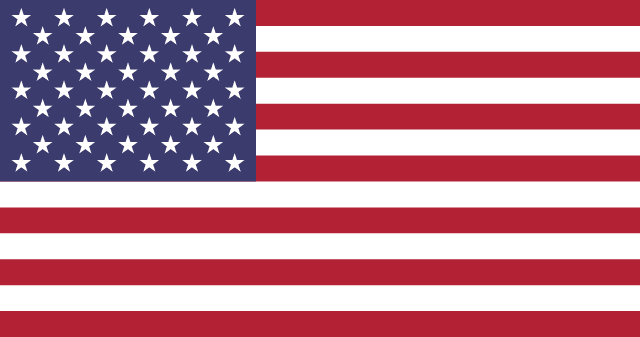
United States
Federal presidential republic and the world's largest economy, with power divided among the presidency, Congress, the states, and the federal courts. U.S. politics is highly polarized, two-party dominated, and globally consequential because decisions made in Washington shape finance, trade, security alliances, technology regulation, and military power far beyond U.S. borders.
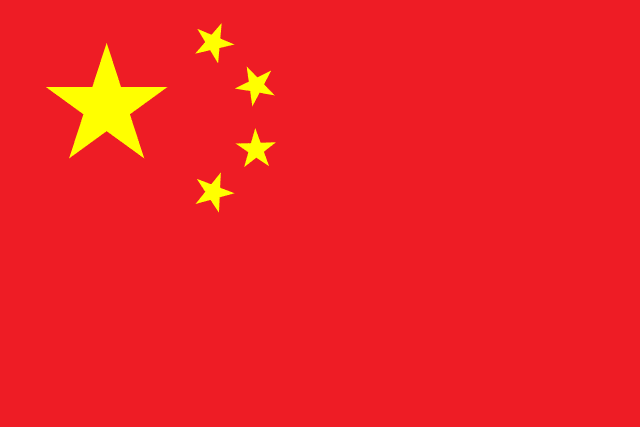
People's Republic of China
Single-party socialist state led by the Chinese Communist Party and one of the two central poles of global power. China combines party control, state planning capacity, export-industrial strength, technological ambition, and a vast domestic market, making its political decisions consequential for global trade, security, supply chains, and regional power balances.
Country Snapshot
This section pulls the most useful structured facts onto one screen: flags, capital cities, system type, current leaders, election links, and how many parties and institutions the graph already connects to each country.
🇺🇸 United States
Federal presidential republic and the world's largest economy, with power divided among the presidency, Congress, the states, and the federal courts. U.S. politics is highly polarized, two-party dominated, and globally consequential because decisions made in Washington shape finance, trade, security alliances, technology regulation, and military power far beyond U.S. borders.
Current Leaders
Election Route
🇨🇳 People's Republic of China
Single-party socialist state led by the Chinese Communist Party and one of the two central poles of global power. China combines party control, state planning capacity, export-industrial strength, technological ambition, and a vast domestic market, making its political decisions consequential for global trade, security, supply chains, and regional power balances.
Current Leaders
Election Route
System overview
The United States is a federal presidential republic founded in 1789, with power divided among an elected executive, a bicameral legislature, and an independent judiciary. Sovereignty derives from the people through regular competitive elections, and the Constitution limits what any branch of government may do. China is a unitary one-party socialist state governed by the Chinese Communist Party (CCP), founded in its current form in 1949 under Mao Zedong. The state and the party are fused: the CCP controls all major government institutions, the military, the courts, and the press. There is no formal separation of powers — the Party is the supreme authority, and its decisions carry force over any government body.
Executive power
The U.S. president serves four-year terms capped at two by the 22nd Amendment (1951), is elected by the Electoral College, and faces constant checks from Congress and the courts. President Biden won in 2020 with 81 million votes; President Trump returned to office in January 2025 after winning the 2024 election. Xi Jinping consolidated power by simultaneously holding General Secretary of the CCP, President of the PRC, and Chairman of the Central Military Commission — the three key positions that together constitute paramount leadership. The National People's Congress removed the two-term limit on the presidency in a 2018 constitutional amendment, effectively allowing Xi to remain in power indefinitely. No formal opposition mechanism or succession process constrains him.
Legislature
The U.S. Congress has 535 members — 100 senators (two per state, six-year terms) and 435 representatives (two-year terms, population-based districts) — who are independently elected and regularly vote against the president's agenda. Congress controls the budget, declares war, confirms appointments, and can impeach the president; divided government (where one party controls the White House and the other controls Congress) has been the norm for much of the last three decades. China's National People's Congress (NPC) has 2,977 delegates selected through a multi-tier indirect process controlled by the CCP; it meets for approximately two weeks per year. In practice it functions as a ratifying body: every major piece of legislation it considers passes, typically near-unanimously. The NPC cannot block Party decisions or independently initiate significant legislation.
Political parties
American politics is dominated by two parties — the Democratic Party and the Republican Party — shaped by a first-past-the-post electoral system that structurally marginalizes third parties; no third-party candidate has won a presidential election since 1860. Independents like Bernie Sanders and third parties like the Greens and Libertarians contest elections but hold minimal power. The Chinese Communist Party has over 98 million members as of 2023, making it the world's largest political party by membership. Organized political opposition is constitutionally prohibited. Eight minor "democratic parties" are permitted to exist — including the China Democratic League and the China Association for Promoting Democracy — but they operate explicitly under CCP leadership and do not contest for power.
Elections
The United States holds elections at federal, state, and local levels on regular cycles. Universal adult suffrage was effectively established by the Voting Rights Act of 1965. Presidential elections use the Electoral College (538 electors), which has twice in recent history produced a president who lost the popular vote (2000, 2016). Voter registration, ID laws, and gerrymandering are contested policy battlegrounds. China holds no competitive national elections. Village-level elections for local committees exist but are closely managed by the CCP, and candidates must be vetted. NPC delegates are chosen through a multi-tier indirect process in which CCP structures control nominations at every level. Xi Jinping was "elected" as president in 2023 by the NPC with 2,952 votes in favor, zero against, and three abstentions.
Civil liberties and press freedom
The U.S. First Amendment protects freedom of speech, press, religion, and assembly from government interference. The United States ranks approximately 55th on Reporters Without Borders' 2024 Press Freedom Index — reflecting concerns about media consolidation and political polarization but within a context of genuine press plurality and no state censorship. China ranks 172nd out of 180 countries on the same index. The Great Firewall blocks Google, Facebook, WhatsApp, YouTube, Twitter/X, and most foreign news sites for the country's 1.05 billion internet users. The 2020 National Security Law imposed on Hong Kong criminalized speech and assembly previously protected under "one country, two systems," and resulted in the arrest of pro-democracy activists including media owner Jimmy Lai. Tiananmen Square (June 4, 1989), in which hundreds to thousands of protesters were killed by military forces, remains censored from Chinese public discourse.
Judicial independence
U.S. federal judges are appointed for life tenure by the president and confirmed by the Senate, designed to insulate them from political pressure. The Supreme Court established the principle of judicial review — the power to strike down laws as unconstitutional — in Marbury v. Madison (1803), and the Court has used this power to invalidate major federal and state laws throughout its history, including in politically consequential rulings against both Democratic and Republican administrations. China's constitution explicitly states that courts must "accept CCP leadership." The Supreme People's Court coordinates its jurisprudence with Party priorities. Xi Jinping's anti-corruption campaign, launched in 2012 and run by the Central Commission for Discipline Inspection (CCDI), operates entirely outside the judicial system and has detained over 1.5 million officials including sitting Politburo members — the most powerful judicial actor in China is a party body, not a court.
Military and security
The United States spent approximately $886 billion on defense in FY2024 — the largest military budget in the world by a significant margin. The U.S. military maintains over 750 overseas bases and installations across roughly 80 countries, and the president serves as commander-in-chief under civilian control with congressional oversight over war powers and appropriations. China's official 2024 defense budget was approximately $225 billion (a 7.2% year-on-year increase), but Western analysts estimate actual spending at $300–400 billion when off-budget programs are included. The People's Liberation Army (PLA) is constitutionally subordinate to the CCP, not the state — Xi restructured the Central Military Commission in 2016, placing loyalists in key positions. China has expanded its carrier fleet, deployed hypersonic glide vehicles (DF-17), and is on track to triple its nuclear warhead count to approximately 1,500 by 2035 according to the U.S. Department of Defense.
Economic governance
The U.S. economy is a market economy with a GDP of approximately $27.4 trillion in 2024, the world's largest by nominal value. The Federal Reserve operates with formal independence from the White House, and the private sector accounts for the majority of economic output and employment. Major U.S. tech companies — Apple, Microsoft, Google, Amazon, Meta — have market capitalizations exceeding some national GDPs. China operates a state-directed market economy ("socialism with Chinese characteristics") with a nominal GDP of approximately $17.7 trillion in 2024 (approximately $34 trillion at purchasing power parity). State-owned enterprises (SOEs) dominate strategic sectors including energy, banking, telecoms, and defense manufacturing. The government's Five-Year Plans set binding industrial targets; "Made in China 2025" (launched 2015) aims to capture global leadership in ten advanced industries including semiconductors, electric vehicles, and AI. Capital controls restrict cross-border financial flows.
Federalism vs centralism
The United States has a strong federal structure: 50 states retain significant autonomous authority over taxation, education, criminal law, policing, and social policy under the 10th Amendment's reservation of non-delegated powers. States like California have pursued policies directly contrary to the federal government's position on climate, immigration, and gun control — and have successfully maintained them. China's 34 provincial-level units are formally organized as autonomous regions, provinces, and municipalities, but the CCP appoints provincial Party secretaries who outrank governors and are accountable upward to Beijing. "One country, two systems" was promised to Hong Kong until 2047 at handover in 1997; the 2020 National Security Law and 2021 electoral overhaul have substantially eliminated functional political autonomy. Tibet and Xinjiang are governed under direct security control.
Rule of law vs rule of party
The U.S. rule of law principle — that the same laws apply equally to the government and to citizens, and that no individual is above the law — has been tested but structurally upheld: courts have ruled against presidents from both parties, and the legal system has indicted former presidents. The principle is imperfect in practice (criminal justice disparities by race are well-documented) but remains the foundational norm. China's 2018 constitutional amendment enshrined "CCP leadership" as the fundamental organizing principle of the state, explicitly placed above other constitutional provisions. The CCDI anti-corruption campaign (2012–present) has detained over 1.5 million officials, including Politburo Standing Committee member Zhou Yongkang (sentenced 2015), two CMC vice-chairs, and scores of senior generals — but the campaign is directed by the Party against the Party and subject to no external check.
Human rights record
The United States has significant documented human rights issues: a prison population of approximately 2.1 million (the highest per-capita incarceration rate in the world), ongoing concerns about police use of force, immigration detention of asylum seekers, and the legacy of systemic racial disparities in the justice system. However, the U.S. has strong formal legal protections, independent courts, a free press capable of reporting abuses, and political mechanisms for accountability. China's record includes the mass detention of Uyghur Muslims in Xinjiang in "vocational education and training centers" — estimated by a UN human rights report (2022) to involve serious human rights violations; systematic suppression of Tibetan cultural and religious practice; the elimination of independent trade unions (the 2018 Jasic Technology labor incident saw workers and student supporters arrested); eradication of independent civil society; and a social credit system coordinating financial, legal, and reputational sanctions.
Foreign policy posture
The United States was the principal architect of the post-1945 liberal international order — founding the United Nations (1945), NATO (1949), IMF, World Bank, and WTO — and remains the largest contributor to each. U.S. foreign policy has oscillated between liberal internationalism and "America First" transactionalism under different administrations, with Trump's second term (2025–) introducing tariff escalation and NATO burden-sharing pressure. China's Belt and Road Initiative, launched in 2013, has committed over $1 trillion to infrastructure investment across 150+ countries, primarily in the Global South, under a "no political conditions attached" framework. China holds a permanent UN Security Council seat and veto, provides an alternative development finance model through the Asian Infrastructure Investment Bank (AIIB, 2016), and leads or co-leads the Shanghai Cooperation Organisation (SCO) and BRICS, which expanded to nine members in 2024.
Strategic rivalry and decoupling
Political scientist Graham Allison's 2017 "Thucydides Trap" analysis examined 16 historical cases where a rising power challenged an established dominant power — 12 ended in war. The U.S.-China relationship is the most-cited contemporary instance. Key escalation points include: Taiwan (U.S. arms sales under the Taiwan Relations Act of 1979, China's military exercises around the island); semiconductor controls (U.S. CHIPS Act 2022 restricts export of advanced chips and chipmaking equipment to China); Huawei bans in the U.S., U.K., Australia, and Canada from 2019–2020; the South China Sea (China rejects the 2016 UNCLOS arbitration ruling against its nine-dash line claims); and tariff escalation beginning under Trump in 2018 and intensifying in 2025. The policy debate has shifted from "engagement" (1990s–2010s) to "decoupling" vs. the Biden administration's preferred term "de-risking," with the 2025 tariff escalation representing the most disruptive trade shock in decades.
Key facts side by side
Population: United States 335 million vs China 1.41 billion. Nominal GDP (2024): $27.4 trillion vs $17.7 trillion (PPP: $27.4tn vs ~$34tn). Nuclear warheads: approximately 5,550 (U.S.) vs approximately 500 (China, rising). UN Security Council permanent seat: both. Reporters Without Borders Press Freedom Index (2024): U.S. 55th vs China 172nd. Economist Intelligence Unit Democracy Index (2023): U.S. 30th ("flawed democracy", 7.85/10) vs China 148th ("authoritarian regime", 1.97/10). Life expectancy: U.S. 76.4 years vs China 77.1 years. Official defense spending (2024): ~$886 billion vs ~$225 billion. Freedom House rating: U.S. "Free" (83/100) vs China "Not Free" (9/100). Internet freedom: U.S. "Free" vs China "Not Free" (lowest-ranked for 9 consecutive years as of 2023).
Follow This Comparison Into The Graph
Frequently Asked Questions
- Who is stronger overall: the US or China?
- The US still has the broader alliance system, reserve-currency power, and global military reach. China has the stronger industrial base, larger manufacturing share, and more concentrated regional mass. The answer depends on which layer of power you care about most.
- Is US vs China mainly about trade or military power?
- It is both. Tariffs, export controls, and supply-chain pressure are one front; Taiwan, the South China Sea, and force projection are another. The rivalry matters because economic and military competition now reinforce each other.
- Who is ahead in the AI race: the US or China?
- The US still has the edge in frontier models, cloud concentration, and top-end semiconductor tooling networks. China remains formidable in industrial scale, state-backed deployment, surveillance applications, and turning technology into national strategy.
- Do the US and China have the same type of government?
- No. The US is a constitutional democracy with competitive elections and separated powers. China is a one-party state where the CCP sits above the rest of the political system.
Related Entities
All comparisonsUnited States
Federal presidential republic and the world's largest economy, with power divided among the presidency, Congress, the states, and the federal courts. U.S. politics is highly polarized, two-party dominated, and globally consequential because decisions made in Washington shape finance, trade, security alliances, technology regulation, and military power far beyond U.S. borders.
People's Republic of China
Single-party socialist state led by the Chinese Communist Party and one of the two central poles of global power. China combines party control, state planning capacity, export-industrial strength, technological ambition, and a vast domestic market, making its political decisions consequential for global trade, security, supply chains, and regional power balances.

President of the United States
Head of state and head of government of the United States. Elected to four-year terms via the Electoral College.

United States Congress
Bicameral legislature of the United States, consisting of the Senate and the House of Representatives.
U.S. Senate
Upper chamber of the U.S. Congress. Each state elects two senators to staggered six-year terms.
U.S. House of Representatives
Lower chamber of the U.S. Congress. Members are elected every two years from congressional districts.
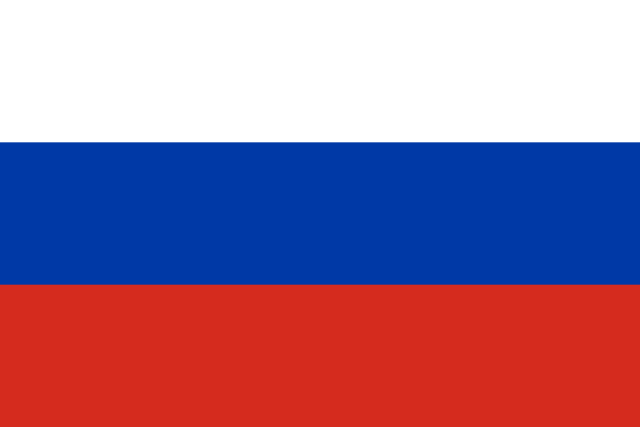
Russia
Federal semi-presidential republic spanning Eastern Europe and Northern Asia. The world's largest country by area and a major nuclear power. Power is heavily centralized in the presidency, with a managed multi-party system dominated by United Russia. Russia is a permanent member of the UN Security Council. The political system combines formal constitutional structures with strong executive dominance, limited opposition activity, and state influence over media and elections.
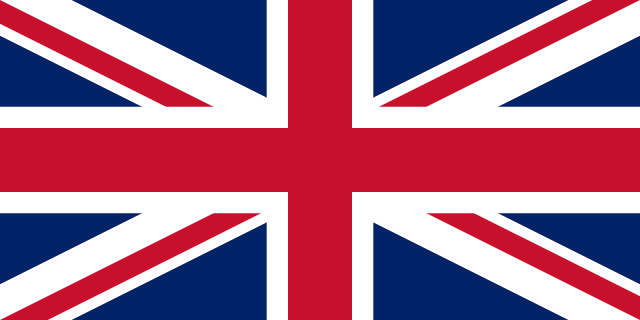
United Kingdom
Constitutional monarchy and parliamentary democracy. Comprises England, Scotland, Wales, and Northern Ireland.
Page Feedback