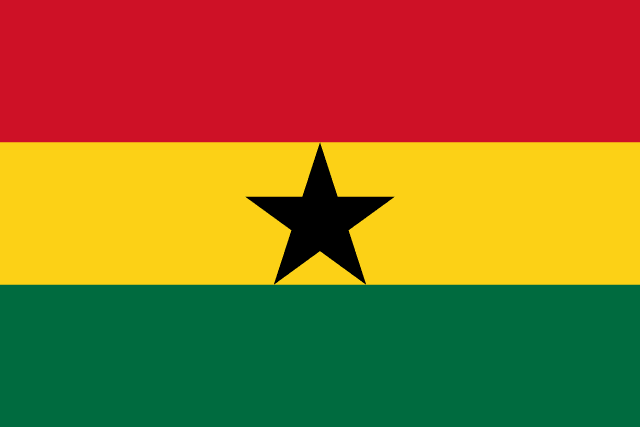
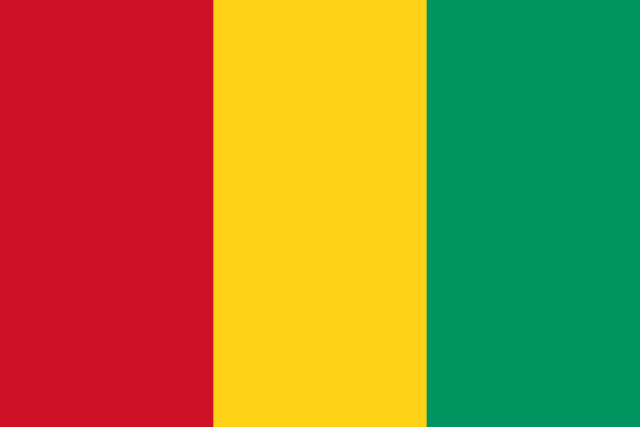
Executive structure and who governs now
Ghana is a presidential republic in which the president is both head of state and head of government. There is no separate prime minister, so executive authority is more centralized and easier for voters to assign politically. As of April 2026, Ghana is led by President John Mahama, who returned to office after the December 2024 election and took office on January 7, 2025. Guinea currently has a dual executive on paper, with President Mamady Doumbouya at the top of the system and Bah Oury serving as prime minister. That difference matters: Ghana's executive structure is a settled constitutional design, while Guinea's has been shaped by recent regime change and a still-fragile post-coup political settlement.
Elections and democratic legitimacy
Ghana's core advantage is not that it avoids political conflict, but that it resolves major leadership contests through elections that are broadly accepted as decisive. Power has moved back and forth between rival parties, incumbents have lost, and the state has continued to function after those losses. Guinea has a much more troubled electoral history. Even when civilian elections have been held, the credibility of the broader constitutional order has been much weaker, and military intervention has remained a live political force. For students trying to understand democratic resilience, Ghana is a stronger case of institutionalized electoral competition; Guinea is a case where the struggle over the rules of politics has remained more fundamental.
Civil-military relations are a major dividing line
One of the sharpest contrasts between the two countries is the political role of the armed forces. Ghana has had coups in its earlier post-independence history, but contemporary Ghanaian politics is not organized around an active military veto over civilian rule. In Guinea, the armed forces have remained much closer to the center of power, culminating in the 2021 overthrow of President Alpha Condé and the rise of Doumbouya. That does not just change who governs; it changes how parties, courts, legislatures, and civil society calculate their room for action. In practical terms, Ghana's politicians compete mainly within the constitutional arena, while Guinea's politicians have had to operate in a system where coercive power has been much more visibly political.
Parties, opposition, and how competition works
Ghana has a relatively legible two-party structure at the national level. The NDC and NPP dominate presidential politics, making elections easier for voters and outside observers to follow. Guinea's party system is more fragmented and historically more personalist, with parties such as the Rally of the Guinean People and the Union of Democratic Forces of Guinea operating in a system that has repeatedly been interrupted by wider constitutional shocks. The result is that Ghanaian party competition feels more institutionalized, while Guinean party politics has more often been filtered through crises of regime survival, transition, and state control.
Legislatures and institutional depth
Ghana's Parliament is embedded in a constitutional order that, while imperfect, has enough regularity to make legislative politics matter on its own terms. Electoral turnover, party discipline, and parliamentary arithmetic all shape the governing environment. Guinea's institutional landscape has been more disrupted. When the executive order itself becomes contested, legislatures struggle to develop the same independent political weight. This is why comparing the two countries is useful beyond labels like "republic" or "democracy": the question is not just whether a parliament exists, but whether it operates inside a trusted rules-based system.
State capacity, economy, and political pressure
Both countries face familiar West African governance pressures: urbanization, youth employment, commodity dependence, and uneven state capacity. But the political effects are not identical. Ghana's economic difficulties tend to become electoral questions, fiscal-management debates, and arguments over the performance of whichever party is in office. In Guinea, economic grievances interact more directly with deeper questions about regime legitimacy, constitutional order, and coercive power. Put simply, economic stress in Ghana usually tests an existing democratic system; economic stress in Guinea can test the system itself.
Bottom line: what is the real difference?
The best one-sentence answer is that Ghana is a more institutionalized electoral republic, while Guinea is a more fragile political order in which the constitutional framework has remained far less secure. Ghana's politics are intense but broadly routinized: parties compete, presidents win and lose, and the state carries on. Guinea's politics have been more discontinuous, with military intervention and regime-level instability playing a much larger role. That makes this comparison valuable for anyone studying West Africa, democratic consolidation, or why neighboring states can diverge so sharply in political development.