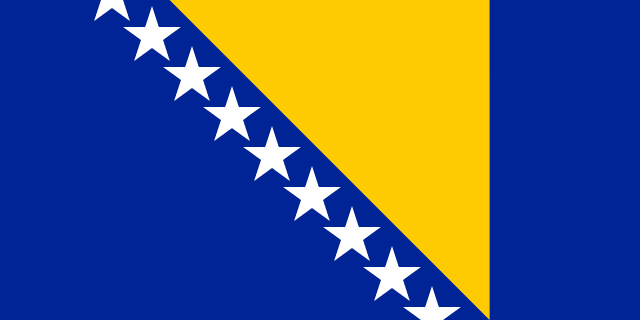
- What type of government does Bosnia and Herzegovina have?
- Bosnia and Herzegovina is a federal republic. This system defines how executive, legislative, and judicial power is organized and exercised in the country. A federal system divides power between a central government and regional units, allowing for local autonomy within a unified national framework.
- What are the main political offices in Bosnia and Herzegovina?
- Key political offices in Bosnia and Herzegovina include Chairman of the Council of Ministers of Bosnia and Herzegovina, Presidency of Bosnia and Herzegovina. These offices shape how executive, legislative, and judicial authority is exercised in the country.
- What is the capital of Bosnia and Herzegovina?
- The capital of Bosnia and Herzegovina is Sarajevo. As the seat of government, the capital is where the country's major political institutions and decision-making bodies are headquartered.
- What are the major political parties in Bosnia and Herzegovina?
- Bosnia and Herzegovina has 74 notable political parties, including Alliance of Independent Social Democrats, Bosnian-Herzegovinian Greens, Bosnian-Herzegovinian Initiative, Bosnian-Herzegovinian Patriotic Party-Sefer Halilović, Bosnian Movement of National Pride. Party competition is central to how political power is distributed — electoral outcomes and coalition dynamics directly determine who governs and what policies are implemented.
- When is the next election in Bosnia and Herzegovina?
- Bosnia and Herzegovina has held 1 notable election, including Bosnia 2022 General Election.
- What is the population of Bosnia and Herzegovina?
- Bosnia and Herzegovina has a population of approximately 3.8 million. Population size affects the country's representation in international bodies, electoral district sizing, and the scale of its political institutions.