Quick Facts
- Population: approximately 33.0 million
- Riyadh is the capital of this islamic theocracy
- 8 political parties recorded
- 1 political office tracked
- 1 political institution mapped
System Snapshot
The fastest way to understand how authority is arranged before you dive into timelines and entities.
- Government Type
- islamic theocracy
Dig Deeper
Go beyond the overview and trace how power actually moves through Saudi Arabia.
Power Profile
Religious authority shapes executive decisions
Religious councils may override elected bodies
Religious and political authority overlaps
Derived from system type and role classification
At a Glance
Saudi Arabia — islamic theocracy, located in Asia, with approximately 33.0 million people — is a sovereign state governed from Riyadh.
Saudi Arabia's political system incorporates theocratic elements, meaning religious authority plays a direct role in governance and lawmaking alongside, or above, secular institutions.
Saudi Arabia's political landscape includes 8 political parties and 1 office.
Verdict: Saudi Arabia is an absolute monarchy where political power is concentrated in the king and, increasingly, the crown prince.
Saudi Arabia is an absolute monarchy governed by the Al Saud royal family. King Salman bin Abdulaziz has been the head of state since 2015, but Crown Prince Mohammed bin Salman (MBS) is widely recognized as the de facto ruler and drives the kingdom's domestic and foreign policy. There are no political parties, no elected national legislature, and no competitive elections for national office.
This page covers Saudi Arabia's monarchical system, the role of MBS, the absence of democratic institutions, and the kingdom's power within the region.
Power Snapshot
Saudi Arabia is one of the world's top defense spenders, leveraging oil wealth to acquire advanced military technology from Western suppliers.
Saudi Arabia
- Military Strength
- High
- Defense Budget
- ~$75 billion
- Active Personnel
- ~257,000
- Global Influence
- High
Key insight: Saudi Arabia is one of the world's top defense spenders, leveraging oil wealth to purchase advanced Western military hardware.
Defense spending uses SIPRI-backed 2024 estimates; personnel uses IISS-backed counts.
Keep Exploring
Political Parties
Explore
Frequently Asked Questions
- What type of government does Saudi Arabia have?
- Saudi Arabia is an absolute monarchy. The king is head of state, head of government, and custodian of the Two Holy Mosques. There are no political parties and no elected national parliament.
- Who is the current ruler of Saudi Arabia?
- King Salman bin Abdulaziz Al Saud has been king since January 2015. However, his son Crown Prince Mohammed bin Salman (MBS) is the de facto ruler, serving as prime minister and driving Vision 2030 reforms.
- Does Saudi Arabia have elections?
- Saudi Arabia holds limited municipal council elections (first held in 2005, with women voting since 2015), but there are no elections for national leadership or legislature. The Shura Council is an appointed advisory body.
- What is Vision 2030?
- Vision 2030 is Saudi Arabia's economic and social reform plan launched by MBS in 2016. It aims to diversify the economy away from oil dependence, develop tourism and entertainment sectors, and modernize Saudi society.
- How does succession work in Saudi Arabia?
- Succession in Saudi Arabia is determined within the Al Saud family. MBS was named crown prince in 2017, replacing his cousin Mohammed bin Nayef. The Allegiance Council formally validates succession but the process is dominated by the ruling king.
- What role does religion play in Saudi governance?
- Islam is central to Saudi governance. The Basic Law declares the Quran and Sunnah as the kingdom's constitution. The king holds the title Custodian of the Two Holy Mosques, and clerical authority has historically shaped law and social policy.
Recommended Reading
Black Wave
Kim Ghattas
How the Saudi-Iran rivalry reshaped the Middle East and the world.
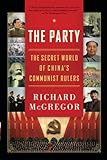
View on AmazonThe Party
Richard McGregor
The secret world of China's Communist rulers and how the Party controls everything.
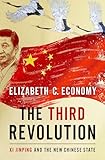
View on AmazonThe Third Revolution
Elizabeth C. Economy
Xi Jinping's ambition to remake China's political and economic model.
View on AmazonPutin's People
Catherine Belton
How the KGB recaptured Russia and then extended its reach into the West.
View on AmazonAs an Amazon Associate, PoliticaHub earns from qualifying purchases.
Connections
Parties
Arab National Liberation Front
Saudi opposition movement
Arab Socialist Action Party – Arabian Peninsula
political party
Arabian Peninsula People's Union
political party
Communist Party in Saudi Arabia
political party in Saudi Arabia
National Assembly Party
Saudi opposition party with members mostly in exile
Organization for the Islamic Revolution in the Arabian peninsula
political party
Organization of Saudi Communists
political party
Umma Islamic Party
political party in Saudi Arabia
Trust & Coverage
- Page Type
- Country
- Last Updated
- March 21, 2026
- Sources
- 2 linked
- Data Coverage
- Comprehensive(85/100)
Country data is assembled from structured entity records, election results, and office timelines.
You Might Also Explore
Arab National Liberation Front
Saudi opposition movement
Arab Socialist Action Party – Arabian Peninsula
political party
Arabian Peninsula People's Union
political party
Communist Party in Saudi Arabia
political party in Saudi Arabia
National Assembly Party
Saudi opposition party with members mostly in exile
Organization for the Islamic Revolution in the Arabian peninsula
political party