
The Arctic Resource War
A Russian icebreaker fires on a Canadian survey vessel over a newly discovered rare earth mineral deposit.
A Russian military icebreaker fires warning shots and rams an unarmed Canadian survey vessel over a newly discovered, multi-trillion-dollar rare earth mineral deposit under the melting arctic ice. The Canadian ship is sinking. Russia unilaterally declares the deposit part of its sovereign continental shelf.
You are the US Secretary of Defense
The Situation Room
>Ottawa demands immediate US logistical and military intervention under NORAD and NATO defense treaties.
>The US Navy currently has exactly zero operational heavy icebreakers available to deploy to the region.
>The deposit contains enough lithium and neodymium to secure energy independence for a century.
Internal Briefing Notes
• The United Nations Convention on the Law of the Sea (UNCLOS) governs continental shelf claims, but the US has never ratified the treaty.
• Operating military vessels in pack ice requires highly specialized heavy icebreakers, a domain where Russia has a 40-to-2 absolute numerical advantage.
• Rare earth metals are critical for advanced military tech (F-35s, guided missiles) and the green energy transition.
Escalation Window
Reveal each phase to see how the situation deteriorates.
The Canadians are drowning and the ice is freezing over. What is your defense posture?
Choose your response. There are no good options.
Send stealth hunter-killers beneath the ice to sink the Russian vessel if provoked. A drastic kinetic escalation in an impossible environment.
Cede the trillions in rare earths to the Sino-Russian alliance. The West permanent loses the green tech race.
Refuse to recognize the Russian claim, but don't shoot. Build a heavy icebreaker fleet and prepare for a cold war spanning decades.
Related Entities
Explore the institutions, countries, and actors involved in this scenario.
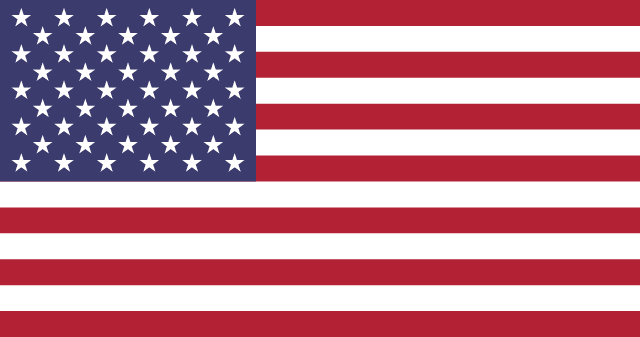
United States
Federal presidential republic and the world's largest economy, with power divided among the presidency, Congress, the states, and the federal courts. U.S. politics is highly polarized, two-party dominated, and globally consequential because decisions made in Washington shape finance, trade, security alliances, technology regulation, and military power far beyond U.S. borders.
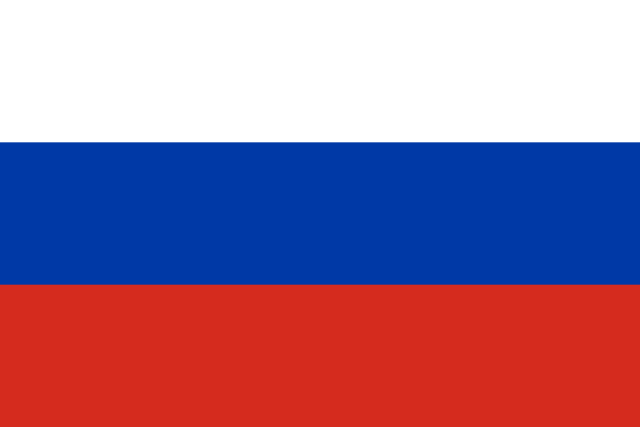
Russia
Federal semi-presidential republic spanning Eastern Europe and Northern Asia. The world's largest country by area and a major nuclear power. Power is heavily centralized in the presidency, with a managed multi-party system dominated by United Russia. Russia is a permanent member of the UN Security Council. The political system combines formal constitutional structures with strong executive dominance, limited opposition activity, and state influence over media and elections.
Scenario Lab Feedback
