The Arctic Sovereignty Standoff
Russia plants a flag on a newly exposed Arctic seabed rich in rare earths. Canada and Denmark scramble warships. NATO's Article 5 doesn't clearly apply to disputed territory.
As Arctic ice retreats to record lows, Russia deploys a naval task force to plant a titanium flag on the Lomonosov Ridge — a vast underwater mountain range containing an estimated $30 trillion in rare earth minerals. Russia claims the ridge as a natural extension of its continental shelf. Canada and Denmark have overlapping claims under UNCLOS.
You are the Canadian Prime Minister
The Situation Room
>The Russian Northern Fleet has established a permanent naval presence with icebreakers, submarines, and anti-ship missile batteries.
>Canada's Arctic fleet consists of six ice-capable patrol vessels — none designed for combat.
>The US has exactly two operational heavy icebreakers. Russia has forty.
Internal Briefing Notes
• The UN Convention on the Law of the Sea (UNCLOS) allows nations to claim continental shelf resources up to 350 nautical miles, but overlapping claims must be resolved by the Commission on the Limits of the Continental Shelf.
• NATO Article 5 applies to armed attacks on member territory, but disputed seabed is not clearly anyone's territory.
• Russia's Northern Fleet is the most powerful Arctic military force by an order of magnitude.
Escalation Window
Reveal each phase to see how the situation deteriorates.
You're outgunned in the Arctic and outmatched in icebreakers. Russia is establishing facts on the seabed. What do you do?
Choose your response. There are no good options.
Request allied naval support. You internationalize the dispute but risk a direct NATO-Russia confrontation in the most remote theater on Earth.
File an emergency UNCLOS arbitration. Russia will ignore the ruling, just as China ignored the South China Sea tribunal, but you hold the legal high ground.
Negotiate a joint development zone, splitting revenues. You sacrifice sovereignty claims but gain access to resources you can't extract alone.
Related Entities
Explore the institutions, countries, and actors involved in this scenario.
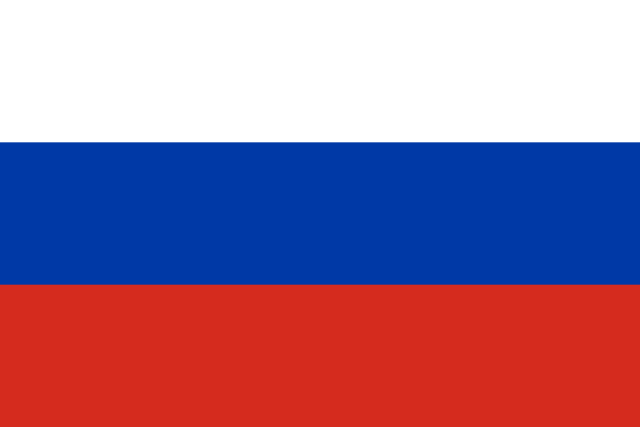
Russia
Federal semi-presidential republic spanning Eastern Europe and Northern Asia. The world's largest country by area and a major nuclear power. Power is heavily centralized in the presidency, with a managed multi-party system dominated by United Russia. Russia is a permanent member of the UN Security Council. The political system combines formal constitutional structures with strong executive dominance, limited opposition activity, and state influence over media and elections.

Canada
Scenario Lab Feedback