
The False Launch Warning
Missile-warning systems in two nuclear states suddenly show inbound launches at the same time, and neither side can prove the alert is fake before the deadline to decide.
At 02:13 AM Eastern, space-based early warning systems indicate a limited ballistic launch headed toward North America. Simultaneously, back-channel intelligence reports that Russian systems are showing an apparently identical inbound strike profile from the United States.
You are the US National Security Advisor
The Situation Room
>STRATCOM believes the track data is internally inconsistent, but not fast enough to rule out a real attack before presidential decision timelines expire.
>The secure line to Moscow is active, but the Kremlin duty officer sounds panicked and refuses to trust anything you say.
>Every additional minute of hesitation risks losing survivable command authority if the launch is real.
Internal Briefing Notes
• Nuclear command systems are designed to function under extreme uncertainty, not to wait for perfect proof.
• False positive filtering depends on cross-validating multiple sensors, but a sophisticated compromise can poison those layers at once.
• Once bombers disperse and submarines receive emergency traffic, even a false alarm becomes an irreversible strategic signal.
Escalation Window
Reveal each phase to see how the situation deteriorates.
No one can certify the warning as fake in time. What do you advise the President?
Choose your response. There are no good options.
You maximize deterrence if the launch is real, but dramatically increase the odds of accidental reciprocal escalation.
You reduce the risk of starting nuclear war by mistake, but may absorb a decapitating strike if the warning is genuine.
You inject transparency into the crisis, but also reveal vulnerability and potential command confusion to the entire world.
Related Entities
Explore the institutions, countries, and actors involved in this scenario.

United States
Federal presidential republic and the world's largest economy, with power divided among the presidency, Congress, the states, and the federal courts. U.S. politics is highly polarized, two-party dominated, and globally consequential because decisions made in Washington shape finance, trade, security alliances, technology regulation, and military power far beyond U.S. borders.
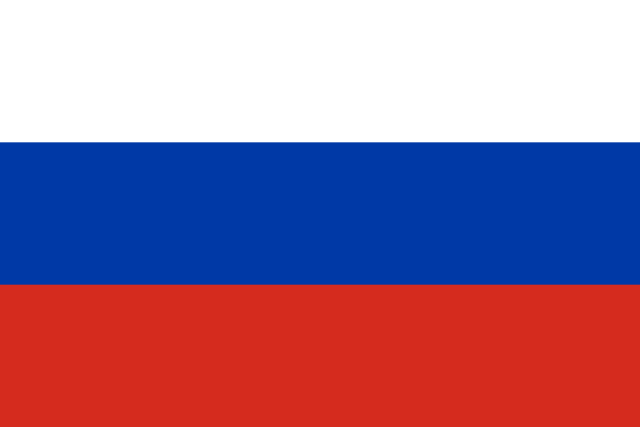
Russia
Federal semi-presidential republic spanning Eastern Europe and Northern Asia. The world's largest country by area and a major nuclear power. Power is heavily centralized in the presidency, with a managed multi-party system dominated by United Russia. Russia is a permanent member of the UN Security Council. The political system combines formal constitutional structures with strong executive dominance, limited opposition activity, and state influence over media and elections.
Scenario Lab Feedback