We use essential storage to run PoliticaHub. Under EU and Swedish rules, analytics and advertising stay off unless you actively allow them. Analytics includes Google Analytics plus Microsoft Clarity session recordings and heatmaps. Advertising consent is also required before any personalized Google ads can load. Privacy Policy.
The Sunday briefing, from North
One email a week. Elections worth watching, sharpest pages of the week, the thing most people misread about a country you'd recognise. No hot takes, no churn.
One email a week. Unsubscribe anytime — I don't take it personally.
South Africa vs Nigeria: Government & Political System Compared (2026) | PoliticaHub
South Africa vs Nigeria: Government & Political System Compared
South Africa and Nigeria are Africa's two largest economies — but they have very different political systems. South Africa is a parliamentary republic; Nigeria is a federal presidential republic.
South Africa is rated Free with a parliamentary system; Nigeria is Partly Free with a federal presidential system.
South Africa is a parliamentary republic where the president (Cyril Ramaphosa) is elected by the National Assembly — not by direct popular vote. Nigeria is a federal presidential republic where the president (Bola Tinubu since 2023) is directly elected. South Africa is rated "Free" by Freedom House; Nigeria is "Partly Free." Nigeria has 36 states with devolved powers; South Africa has nine provinces with limited autonomous authority.
One email a week. Elections worth watching, sharpest pages of the week, the thing most people misread about a country you'd recognise. No hot takes, no churn.
One email a week. Unsubscribe anytime — I don't take it personally.
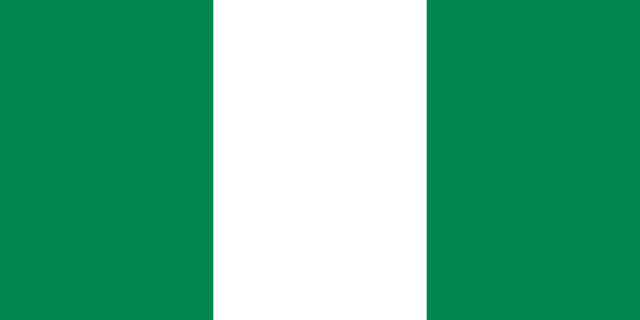
🇳🇬 NG· federal republic· Capital: Abuja
Country Snapshot
This section pulls the most useful structured facts onto one screen: flags, capital cities, system type, current leaders, election links, and how many parties and institutions the graph already connects to each country.
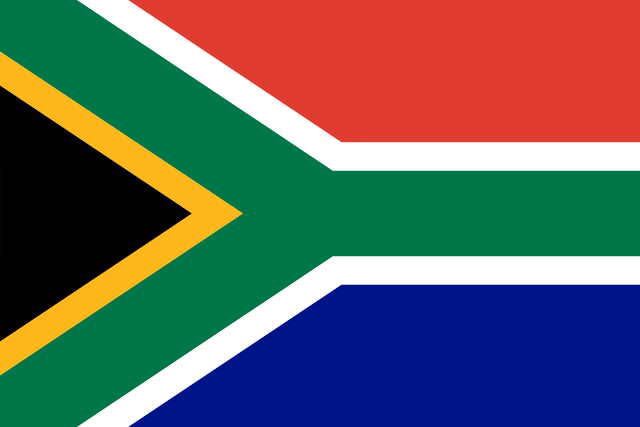
🇿🇦 South Africa
Parliamentary republic at the southern tip of Africa. Multi-party democracy since the end of apartheid in 1994.
Capital: Pretoria / Cape Town / BloemfonteinGovernment: Unitary parliamentary constitutional republicPopulation: 62 millionLegislature: Parliament (National Assembly and National Council of Provinces)Executive: President serves as both head of state and head of government, elected by the National Assembly after general elections. Combines elements of presidential and parliamentary systems.
Capital: AbujaGovernment: federal republicPopulation: 211.4 million
Current Leaders
No current leader timeline is attached yet.
Election Route
Upcoming
No upcoming election is attached yet.
Graph Coverage
66 linked parties
1 linked institutions
1 linked offices
3 tracked elections
🇿🇦 South Africa
🇳🇬 Nigeria
Description
Parliamentary republic at the southern tip of Africa. Multi-party democracy since the end of apartheid in 1994.
sovereign state in West Africa
Country
ZA
NG
Continent
Africa
Africa
Capital
Pretoria / Cape Town / Bloemfontein
Abuja
Government
Unitary parliamentary constitutional republic
federal republic
Population
62 million
211.4 million
Legislature
Parliament (National Assembly and National Council of Provinces)
System type
South Africa is a parliamentary republic where the president is elected by the National Assembly, not by direct popular vote. The African National Congress has dominated since 1994, though the 2024 election produced a coalition government. Nigeria is a federal presidential republic where the president is elected directly by the people. Bola Tinubu has held the office since May 2023. Both presidents serve as both head of state and head of government, but their selection mechanisms are fundamentally different.
Federal structure
Nigeria is a federation of 36 states plus the Federal Capital Territory. States have their own governors, assemblies, and significant devolved powers — particularly over policing and taxation. South Africa has a weaker federal design with nine provinces that have limited autonomous authority. Nigeria's federalism is more consequential for daily governance, creating greater regional variation in administration and policy.
Democratic health
South Africa is rated "Free" by Freedom House with competitive multiparty elections, an independent judiciary, and a free press. Nigeria is rated "Partly Free" — elections are competitive but marred by irregularities, voter suppression, and institutional weaknesses. South Africa's constitution (1996) is considered one of the world's most progressive. Nigeria has had democratic rule since 1999 after decades of military government.
Why the comparison matters
South Africa and Nigeria together account for the majority of sub-Saharan Africa's GDP. Understanding how they are governed helps explain economic and institutional divergence across the continent. South Africa's coalition politics after 2024 and Nigeria's persistent governance challenges represent two different trajectories for African democracy.
What is the difference between South Africa and Nigeria's government?
South Africa is a parliamentary republic — the president is elected by parliament. Nigeria is a presidential republic — the president is directly elected and heads a 36-state federation.
Is Nigeria a democracy?
Yes, but rated "Partly Free." Nigeria has had civilian democratic rule since 1999, but elections are often marred by irregularities.
Which country has a stronger democracy?
South Africa ranks higher — rated "Free" with a more independent judiciary, free press, and stronger constitutional protections.
Do South Africa and Nigeria have the same political system?
No. South Africa uses a parliamentary system; Nigeria uses a presidential system modeled partly on the United States.
President serves as both head of state and head of government, elected by the National Assembly after general elections. Combines elements of presidential and parliamentary systems.