Country Briefing
Argentina Political System & Government Explained
country in South America
South America
Argentina is the country that most consistently defies the assumption that wealth, education, and strong institutions guarantee democratic stability — a middle-income nation with a century of oscillation between populism, military rule, economic crisis, and democratic renewal that makes it the essential case for understanding political instability in Latin America.
Why Argentina Is Structurally Important
Argentina matters for comparative politics because it is the most puzzling case of democratic underperformance in the world. At the start of the twentieth century, Argentina was one of the ten wealthiest countries on earth, with a literate population, a functioning legal system, and the institutional capacity of a European state. Over the following century, it experienced six military coups, repeated cycles of hyperinflation and sovereign default, the systematic murder of political opponents during the Dirty War, the Falklands/Malvinas military adventure, and a pattern of economic boom and bust that has no parallel among countries with comparable levels of human development. The question of why Argentina failed to consolidate stable democratic governance despite possessing all the material prerequisites is one of the oldest and most debated puzzles in comparative politics.
For analytical purposes, Argentina is indispensable because it demonstrates that democratic stability depends not just on wealth and institutions but on the political settlement between competing social forces — and that when no durable settlement exists, the same country can oscillate between radically different political models within a single generation. Argentina has tried import-substitution industrialization and free-market neoliberalism, Peronist populism and military technocracy, commodity-boom spending and IMF austerity, each time with the conviction that the previous model was wrong and the new one would finally work. This pattern of radical policy oscillation, driven by political coalitions that are too strong to be ignored but too weak to govern alone, is what makes Argentina the paradigmatic case for understanding how political economy and institutional design interact in middle-income democracies.
The Presidency, Federalism, and the Peronist Machine
Argentina's constitution creates a federal presidential republic with twenty-three provinces and the Autonomous City of Buenos Aires. The president is directly elected for a four-year term with one possible consecutive reelection, and exercises broad executive powers including the ability to issue necessity and urgency decrees (decretos de necesidad y urgencia, or DNUs) that carry the force of law unless both chambers of Congress explicitly reject them. This decree power has been used aggressively by presidents of all ideological orientations — Menem, Kirchner, Macri, Fernández, and now Milei — and represents one of the most significant concentrations of executive authority in any presidential democracy. The practical effect is that Argentine presidents can govern by decree on economic policy, regulatory reform, and even institutional restructuring, with Congress serving as a reactive check rather than a proactive legislator.
Argentine federalism is formally robust but practically shaped by a profound fiscal imbalance: the national government collects most tax revenue and redistributes it to provinces through a revenue-sharing system (coparticipación) whose formula is a perpetual source of political conflict. Provincial governors are powerful political actors who control patronage, police forces, and local judiciaries, and who deliver or withhold legislative votes in Congress depending on their relationship with the president. This makes provincial politics — particularly in the Peronist heartland of Buenos Aires province — a critical site of power that national politics cannot bypass. The Justicialist (Peronist) Party is less a party than a political movement with organizational capacity that no rival has ever matched: its network of labor unions, social organizations, municipal operatives, and provincial machines gives it structural advantages in mobilization and governance that persist even when Peronism loses presidential elections.
The Milei Disruption and Argentina's Recurring Political Crisis
Javier Milei's election as president in November 2023 with 56% of the runoff vote represents the most dramatic disruption of the Argentine party system since the Peronist-Radical bipolarity was established in the mid-twentieth century. Milei ran as an explicitly libertarian candidate on a platform of dollarization, the abolition of the central bank, radical deregulation, and the elimination of entire government ministries — proposals that would have been considered fringe anywhere in Latin America just years earlier. His victory reflected not the strength of libertarian ideology among Argentine voters but the exhaustion of the existing alternatives: the Peronist coalition under Alberto Fernández delivered economic stagnation and accelerating inflation, while the centre-right Juntos por el Cambio coalition under Macri had already failed once and lost credibility as an agent of change.
Milei governs as a minority president — his La Libertad Avanza party holds a small fraction of seats in both chambers of Congress — and has relied extensively on executive decrees and the mega-DNU (a sweeping omnibus decree reforming hundreds of regulations) to advance his agenda. This governing strategy tests the institutional limits of Argentine presidentialism: the judiciary has blocked some provisions, Congress has negotiated others, and the relationship between executive ambition and legislative restraint is being renegotiated in real time. The deeper question is whether Milei's anti-establishment movement represents a permanent realignment of Argentine politics — comparable to the emergence of Peronism itself — or a protest presidency that will burn through its mandate without building the institutional capacity to sustain change. Argentina's history suggests that outsider movements that cannot build durable coalitions are eventually absorbed or defeated by the structural forces they challenged.
What Advanced Readers Should Watch
Advanced readers should focus on three dynamics. First, the economic stabilization question: Milei's political survival depends on whether his shock therapy — fiscal austerity, currency devaluation, subsidy elimination, and deregulation — can reduce inflation and restore growth before the social costs generate a political backlash that his minority government cannot survive. Argentina has attempted shock therapy before, under Menem in the 1990s, and the initial success was followed by a catastrophic crisis in 2001 that destroyed the political class and produced the worst economic collapse in the country's history. Whether this iteration follows a different trajectory depends on variables — commodity prices, IMF support, social tolerance for austerity — that are only partially within the president's control.
Second, watch the Peronist movement. Peronism has lost elections before and come back; the question is whether it can reconstruct itself as a coherent opposition to Milei's libertarianism or whether it fragments into competing factions — Kirchnerism, pragmatic Peronism, and provincial caudillismo — that cannot agree on leadership or strategy. The answer will determine whether Argentine politics stabilizes around a new competitive axis (libertarianism vs. Peronist social democracy) or reverts to the chaotic multipolarity that has characterized its worst periods. Third, track the institutional quality question: Argentina's judiciary, central bank, and regulatory agencies have historically been subjected to political capture by whichever faction holds the presidency. Whether Milei's deregulatory agenda strengthens or further weakens institutional independence will shape the country's trajectory long after his presidency ends.
Political Architecture
How Argentina Is Structured
The executive, legislature, elections, parties, and institutions that make up Argentina's political system — and how they connect.
Dig Deeper
Power Profile
National executive shares authority with regional governments
Multiple levels of elected representation
Constitutionally divided between national and regional levels
Shapes global trade, security, and diplomatic outcomes beyond national borders
Constitutionally guaranteed regional powers create multiple governance layers
Derived from system type and role classification
Position in System
Argentina is organized as a federal system, dividing political authority between a national government and constituent regions. This structure allows significant regional autonomy while maintaining unified national policy on defense, trade, and foreign affairs. The system operates through 1 tracked political offices and 1 institutions, which collectively define how authority is exercised, checked, and transferred.
Political Parties
All 152 partiesAcción por la República
political party in Argentina
Alliance Front of Production and Labour
Argentine political party
Argentine Libertarian Federation
Argentine anarchist organization
Argentine Marxist–Leninist Communist Party
political party in Argentina
Argentine Nationalist Action
political party in Argentina
Argentine Regional Workers' Federation
Argentina's first national labor confederation
Frequently Asked Questions
- What type of government does Argentina have?
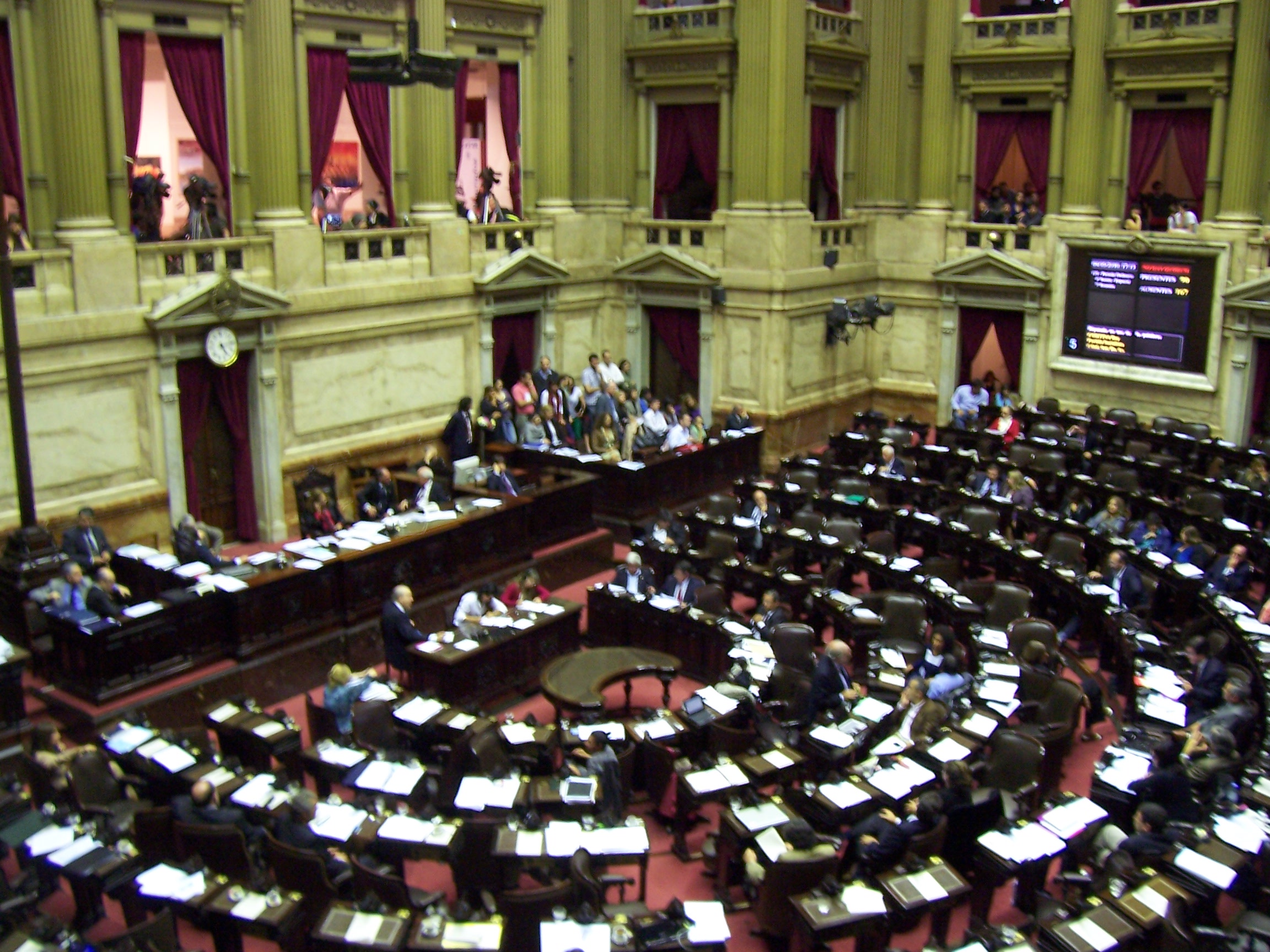
- Argentina is a federal presidential republic with 23 provinces and the Autonomous City of Buenos Aires. The president holds executive power and governs with a cabinet. The bicameral National Congress comprises the Senate and Chamber of Deputies.
- Who is the current president of Argentina?
- Javier Milei has been President of Argentina since December 2023. A libertarian economist, he won a decisive runoff against Sergio Massa with about 56% of the vote.
- What are the main political parties in Argentina?
- The main forces are La Libertad Avanza (Milei's libertarian party), Peronism/Justicialist Party (centre-left to left, historically dominant), and Juntos por el Cambio/PRO (centre-right opposition). Argentine parties frequently splinter and realign.
- What is Peronism?
- Peronism (based on Juan Peron's legacy) is Argentina's most enduring political movement, blending populism, labor rights, and nationalism. The Justicialist Party is its formal party vehicle. It has governed Argentina for most of the period since the 1940s.
- What is Milei's agenda?
- Milei's agenda centers on radical deregulation, dollarization debates, slashing public spending, closing government agencies, and liberalizing Argentina's economy. He governs as a minority president and has relied heavily on executive decrees.
- Who leads Argentina?
- Key political offices in Argentina include President of Argentina. These offices shape how executive, legislative, and judicial authority is exercised in the country.
Verdict: Argentina is a federal presidential republic that has undergone a sharp political realignment with the election of libertarian president Javier Milei.
Argentina is a federal presidential republic. The president is both head of state and head of government, elected by direct vote for a four-year term with one possible re-election. Javier Milei, a libertarian economist, took office in December 2023 after winning a decisive runoff, representing a major break from Argentina's traditional Peronist-vs-anti-Peronist political divide.
This page covers Argentina's presidential system, the Milei government's libertarian agenda, the Peronist opposition, and the country's political transformation.
Power Snapshot
Argentina's military has been deliberately downsized since the return to democracy in 1983, with limited power projection capability.
Argentina
- Military Strength
- Medium
- Defense Budget
- ~$5 billion
- Active Personnel
- ~75,000
- Global Influence
- Low
Key insight: Argentina's military has been deliberately downsized since the return to democracy in 1983, with limited power projection capability.
Defense spending uses SIPRI-backed 2024 estimates; personnel uses IISS-backed counts.
Keep Exploring
Recommended Reading
The Shortest History of Germany
James Hawes
A fast, vivid survey of Germany's political story from Caesar to Merkel.
View on AmazonBrazil: A Biography
Lilia M. Schwarcz & Heloisa M. Starling
An ambitious history of Brazil from colony to contemporary political giant.
View on AmazonThe Big Shift
John Ibbitson & Darrell Bricker
How immigration and urbanization are remaking Canadian politics.
View on AmazonIron Curtain
Anne Applebaum
How Soviet control was imposed on Eastern Europe after World War II.
View on AmazonAs an Amazon Associate, PoliticaHub earns from qualifying purchases.
Connections
Trust & Coverage
- Page Type
- Country
- Last Updated
- March 21, 2026
- Sources
- 2 linked
- Data Coverage
- Comprehensive(85/100)
Country data is assembled from structured entity records, election results, and office timelines.
You Might Also Explore
Acción por la República
political party in Argentina
Alliance Front of Production and Labour
Argentine political party
Argentine Libertarian Federation
Argentine anarchist organization
Argentine Marxist–Leninist Communist Party
political party in Argentina
Argentine Nationalist Action
political party in Argentina
Argentine Regional Workers' Federation
Argentina's first national labor confederation