
PoliticaHub Reference Sheet
Chinese Communist Party
Party · Printed June 1, 2026 · politicahub.com/party/chinese-communist-party-cn
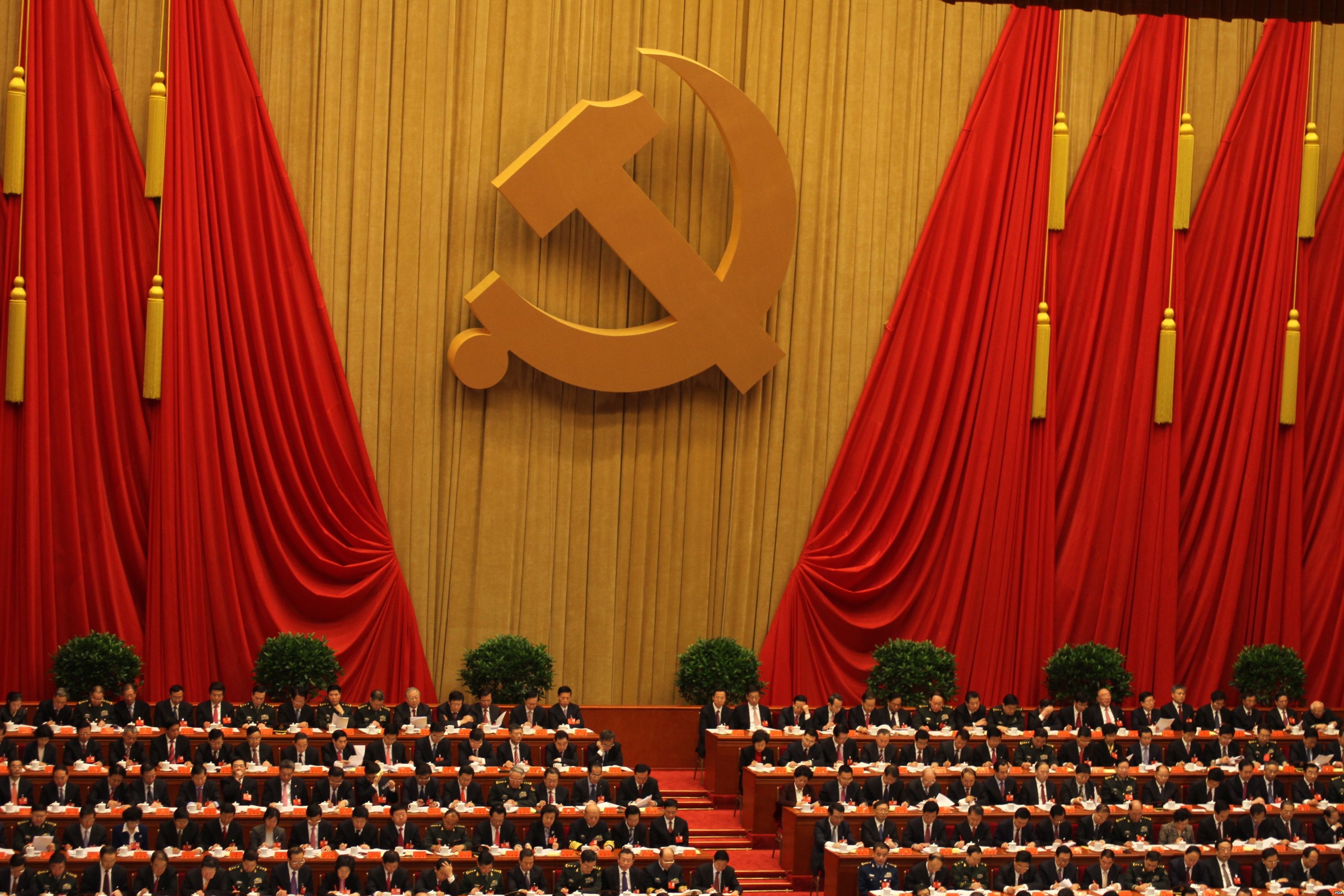
The ruling party of the People's Republic of China and the central command structure of the Chinese political system. The CCP does not merely compete for power: it monopolizes it, controls cadre promotion, directs the state, and defines the ideological boundaries of public life.
Key Facts
| founded year | 1921 |
| party leader | Xi Jinping (general secretary since November 15, 2012) |
Frequently Asked Questions
- Q: What ideology does Chinese Communist Party follow?
- A: Chinese Communist Party is ideologically aligned with Socialism.
- Q: When was Chinese Communist Party founded?
- A: Chinese Communist Party was founded in 1921, about 105 years ago.
- Q: Who is associated with Chinese Communist Party?
- A: Politicians connected to Chinese Communist Party on this site include Cai Qi, Hu Jintao, Li Keqiang, Li Qiang, Wang Yi.
- Q: Where does Chinese Communist Party operate?
- A: Chinese Communist Party operates in People's Republic of China.
- Q: What is Chinese Communist Party?
- A: The ruling party of the People's Republic of China and the central command structure of the Chinese political system. The CCP does not merely compete for power: it monopolizes it, controls cadre promotion, directs the state, and defines the ideological boundaries of public life.
Source: politicahub.com/party/chinese-communist-party-cn
Chinese Communist Party
The ruling party of the People's Republic of China and the central command structure of the Chinese political system. The CCP does not merely compete for power: it monopolizes it, controls cadre promotion, directs the state, and defines the ideological boundaries of public life.
People's Republic of ChinaFounded 1921Socialism
Ideologically tied to Socialism.
Preguntas frecuentes
- What ideology does Chinese Communist Party follow?
- Chinese Communist Party is ideologically aligned with Socialism.
- When was Chinese Communist Party founded?
- Chinese Communist Party was founded in 1921, about 105 years ago.
- Who is associated with Chinese Communist Party?
- Politicians connected to Chinese Communist Party on this site include Cai Qi, Hu Jintao, Li Keqiang, Li Qiang, Wang Yi.
- Where does Chinese Communist Party operate?
- Chinese Communist Party operates in People's Republic of China.
- What is Chinese Communist Party?
- The ruling party of the People's Republic of China and the central command structure of the Chinese political system. The CCP does not merely compete for power: it monopolizes it, controls cadre promotion, directs the state, and defines the ideological boundaries of public life.
Why It Was Founded
The Chinese Communist Party was founded in 1921 as a revolutionary Marxist organization seeking to overturn warlord fragmentation, imperialist domination, and the old social order, and later to build a socialist state under party leadership. In contemporary China its institutional purpose is broader: it monopolizes political power, sets national strategy, controls cadre advancement, and treats party leadership as the core principle of the state.
Related people, parties, or institutions mentioned in the page.
Party History
The CCP rose from a small movement shaped by the May Fourth era and Soviet influence into the force that won the civil war and founded the People's Republic in 1949. Its history includes the Mao period, the catastrophes of the Great Leap Forward and Cultural Revolution, Deng-era reform and opening, and the Xi Jinping era of renewed centralization, ideological discipline, and tighter party control over the economy, society, and security state.
Learn More
Two books worth reading
 View on AmazonStart Here
The Party
Richard McGregor
The secret world of China's Communist rulers and how the Party controls everything.
View on Amazon Listen on AudibleDeeper History
Political Parties
Giovanni Sartori
The classic framework for understanding how party systems form and compete.
Listen on Audible
As an Amazon Associate, PoliticaHub earns from qualifying purchases (including Audible) at no extra cost to you.
Connections
Members
Cai Qi
Member of the Politburo Standing Committee and head of the CCP Central Secretariat since 2022. Former party secretary of Beijing and close associate of Xi Jinping.
Hu Jintao
General Secretary of the CCP from 2002 to 2012 and President of China from 2003 to 2013. Led China during a period of rapid economic growth and rising international influence.
Li Keqiang
Premier of China from 2013 to 2023. Once seen as a rival center of power to Xi Jinping, he oversaw economic policy during China's growth slowdown. Died in 2023.
Li Qiang
Premier of the People's Republic of China since March 2023 and one of Xi Jinping's closest senior lieutenants. Li's career rose through provincial and party management rather than through an independent national technocratic base.
Wang Yi
Director of the CCP Central Foreign Affairs Commission and China's top diplomat. Former foreign minister and a key figure in China's foreign policy establishment.
Xi Jinping
General Secretary of the Chinese Communist Party since 2012 and President of the People's Republic of China since 2013. Paramount leader who consolidated power through anti-corruption campaigns and the removal of presidential term limits. Architect of the Belt and Road Initiative and assertive foreign policy.
Zhao Leji
Chairman of the Standing Committee of the National People's Congress since March 2023 and the third-ranked member of the Politburo Standing Committee. Zhao's influence comes from party discipline, cadre management, and his role in China's formal legislature.
Party Feedback
Trust & Coverage
- Page Type
- Party
- Last Updated
- April 15, 2026
- Sources
- 2 linked
This page is generated from structured entity, relationship, and metadata records.
Coverage is still growing country by country, so some timelines and relationships may be incomplete.
También puedes explorar
Socialism
Family of left-wing ideologies that seeks collective, public, or democratic control over major economic resources and production. Socialists argue that markets alone produce avoidable inequality and that economic power should be more accountable to society.
People's Republic of China
Single-party socialist state led by the Chinese Communist Party and one of the two central poles of global power. China combines party control, state planning capacity, export-industrial strength, technological ambition, and a vast domestic market, making its political decisions consequential for global trade, security, supply chains, and regional power balances.
Cai Qi
Member of the Politburo Standing Committee and head of the CCP Central Secretariat since 2022. Former party secretary of Beijing and close associate of Xi Jinping.
Hu Jintao
General Secretary of the CCP from 2002 to 2012 and President of China from 2003 to 2013. Led China during a period of rapid economic growth and rising international influence.
Li Keqiang
Premier of China from 2013 to 2023. Once seen as a rival center of power to Xi Jinping, he oversaw economic policy during China's growth slowdown. Died in 2023.
Li Qiang
Premier of the People's Republic of China since March 2023 and one of Xi Jinping's closest senior lieutenants. Li's career rose through provincial and party management rather than through an independent national technocratic base.