
China Political System & Government Explained
The People's Republic of China is a unitary one-party socialist republic governed by the Chinese Communist Party (CCP). Xi Jinping serves as General Secretary of the CCP, President, and Chairman of the Central Military Commission, making him the paramount leader. The National People's Congress is the nominal legislature, but real power resides in the CCP Politburo Standing Committee.
What stands out
- 73 parties compete for just 5 tracked governing offices.
- Most active policy lanes in the graph: Artificial Intelligence, Climate Policy, and Defense and Military.
Why China Is Structurally Important
China matters for comparative politics not because it is large or powerful — though it is both — but because it represents the most developed institutional alternative to multiparty electoral democracy. The Chinese Communist Party has governed continuously since 1949 and has built an organizational architecture that manages elite succession, coordinates policy across a continent-sized country, disciplines tens of millions of party members, and adapts to economic and social change without permitting organized political opposition. Understanding how this system works in practice — not as a caricature of dictatorship but as a functioning institutional order with its own internal logic — is essential for anyone who studies political systems comparatively.
The CCP's longevity distinguishes it from most single-party regimes, which tend to collapse within a few decades through revolution, military coup, or elite fragmentation. China has survived the catastrophic failures of the Great Leap Forward and the Cultural Revolution, managed a transition from central planning to state capitalism, absorbed the shock of Tiananmen, and navigated leadership transitions without the regime-threatening instability that destroyed the Soviet Communist Party. The analytical question is not whether the system is democratic — it is not — but how it has sustained coherence and adaptability over a period in which most authoritarian regimes have failed.
How Power Actually Works: The Party-State Architecture
Formal state institutions — the National People's Congress, the State Council, provincial governments — exist and perform real administrative functions, but they do not originate policy or determine leadership. Power in China flows through the party hierarchy: the roughly 2,000-member National Party Congress meets every five years and notionally elects the Central Committee, which in turn selects the Politburo and its Standing Committee. In practice, the composition of these bodies is determined through elite bargaining processes that are opaque even to most party members. The General Secretary of the CCP — currently the paramount leader — sits at the apex of this structure and also holds the positions of President of the PRC and Chairman of the Central Military Commission, fusing party, state, and military authority in a single person.
Below the top leadership, the CCP operates through a cadre management system that evaluates, promotes, rotates, and disciplines officials across the entire state apparatus. Party committees exist in parallel with every level of government, every state-owned enterprise, and increasingly within private companies. The Organization Department manages personnel decisions for millions of positions using performance metrics that historically emphasized economic growth but now incorporate social stability, environmental targets, and political loyalty. This nomenklatura system is the institutional core of CCP governance — it is how the party ensures that state institutions serve party objectives, and it is the mechanism through which central directives are transmitted to local implementation.
The Xi Era: Centralization and the End of Collective Leadership
The post-Mao political system that Deng Xiaoping constructed was designed to prevent the recurrence of one-man rule through informal norms: two-term limits for top leaders, collective decision-making in the Politburo Standing Committee, mandatory retirement ages, and a rough balance among factional groupings. These norms were never codified in binding rules, and Xi Jinping has systematically dismantled them since taking power in 2012. The abolition of presidential term limits in 2018, the elevation of "Xi Jinping Thought" to constitutional status, and the anti-corruption campaign that removed potential rivals have concentrated authority to a degree not seen since Mao.
This centralization has consequences for how the system functions. Under collective leadership, policy emerged from negotiation among Standing Committee members representing different institutional interests and factional networks. Under Xi, decision-making has become more top-down, policy signals from the center carry more weight, and local officials face stronger incentives to demonstrate loyalty than to experiment with innovative governance. The anti-corruption campaign, while genuinely popular and effective at removing predatory officials, has also created risk aversion throughout the bureaucracy. The central analytical tension in Chinese politics today is whether the efficiency gains from centralized authority will outweigh the loss of the adaptive, experimentalist governance that characterized the reform era.
What Advanced Readers Should Watch
Advanced readers should track two structural dynamics. First, the succession question: every leadership transition in CCP history has been fraught, and Xi's removal of term limits means that the next transition has no institutional template. Whether power transfers smoothly to a designated successor, triggers an intra-party crisis, or is simply deferred indefinitely will reveal whether the CCP has solved the fundamental weakness of personalist authoritarian systems or merely postponed it. The absence of a clear succession mechanism is the single greatest institutional vulnerability of the current Chinese system.
Second, watch the relationship between the party-state and a Chinese society that no longer fits the model the CCP built for it. The party's legitimacy has rested heavily on economic performance, but slowing growth, demographic decline, a property sector crisis, and rising youth unemployment are testing that social contract. The response — tighter ideological control, expanded surveillance, regulatory crackdowns on the tech sector, and a pivot toward national security — is a bet that political control can substitute for economic dynamism as a source of regime stability. Whether that bet holds or breaks is the defining question for Chinese politics this decade.
Political Architecture
How People's Republic of China Is Structured
The executive, legislature, elections, parties, and institutions that make up People's Republic of China's political system — and how they connect.
Dig Deeper
Election Tracker
All electionsChina 2023 NPC Leadership Selection
The 14th National People's Congress in March 2023 formally elected Xi Jinping to a third presidential term and installed Li Qiang as premier. Confirmed the leadership lineup set by the 20th Party Congress.
China 2022 CCP 20th National Congress
The 20th National Congress of the Chinese Communist Party held October 2022. Xi Jinping secured an unprecedented third term as General Secretary and stacked the Politburo Standing Committee with loyalists.
Political Parties
All 73 partiesA4 Alliance
political alliance in Hong Kong
Alliance for Change
political party in Macau
Alliance of Resuming British Sovereignty over Hong Kong and Independence
political party in Hong Kong
Association for Democracy and Social Well-Being of Macau
political party in Macau
Association for Helping the Community and Engagement with the People
Political party in People's Republic of China.
Bauhinia Party
Hong Kong pro-Beijing conservative political party
Learn More
Preguntas frecuentes
- What type of government does China have?
- China is a one-party socialist republic. The Chinese Communist Party controls all branches of government and there are no competitive multi-party elections at the national level.
- Who is the current leader of China?
- Xi Jinping is China's paramount leader, serving as General Secretary of the CCP (since 2012), President of the PRC (since 2013), and Chairman of the Central Military Commission.
- Does China have elections?
- China holds local-level elections for People's Congress delegates, but candidates are vetted by the CCP. National leaders are selected through internal party processes, not competitive public elections.
- What is the National People's Congress?
- The National People's Congress (NPC) is China's national legislature with nearly 3,000 delegates. It formally approves laws and leadership appointments, but in practice it ratifies decisions made by the CCP leadership.
- How did Xi Jinping consolidate power?
- Xi consolidated power through anti-corruption campaigns, removal of presidential term limits in 2018, and securing an unprecedented third term as CCP General Secretary in 2022.
- What type of government does People's Republic of China have?
- People's Republic of China is a Unitary one-party socialist republic.
ByNorth
Verdict: China is a one-party state where the Chinese Communist Party holds a constitutional monopoly on political power.
The People's Republic of China is a unitary one-party socialist republic governed by the Chinese Communist Party (CCP). Xi Jinping serves as General Secretary of the CCP, President, and Chairman of the Central Military Commission, making him the paramount leader. The National People's Congress is the nominal legislature, but real power resides in the CCP Politburo Standing Committee.
This page explains how political power works in China, the role of the CCP, the structure of the state, and Xi Jinping's consolidation of authority.
China has the world's largest active military and second-largest defense budget, with rapid naval expansion reshaping the Indo-Pacific balance.
China
- Fuerza militar
- Peer challenger
- Presupuesto de defensa
- ~$296 billion
- Personal activo
- ~2,035,000
- Influencia global
- Very High
Idea clave. The PLA has been transformed by industrial policy and party-directed modernization — record shipbuilding, missile forces, cyber capacity. The gap to the US remains real, and the PLA has limited recent combat experience.
Defense spending uses SIPRI-backed 2024 estimates; personnel uses IISS-backed counts.
- Xi JinpingSee the profile of China's paramount leader and CCP General Secretary.
- Chinese Communist PartyExplore the world's largest political party and its structure of power.
- China Political SystemUnderstand how the CCP, state council, and NPC fit together.
- China vs United StatesCompare the political systems and power of the world's two largest economies.
- Mongolia vs China: Government & Political System ComparedMongolia is a parliamentary democracy landlocked between Russia and China. China is a one-party state under CCP control. They share a long border but have completely different political systems.
- Deng Xiaoping vs Mao Zedong: Two Visions for Communist ChinaMao founded the People's Republic; Deng transformed it. This comparison examines how China's two most consequential leaders held different visions for what communism should mean in practice — and why Deng's economic revolution came after Mao's ideological catastrophes.
Three books worth reading
 View on AmazonStart Here
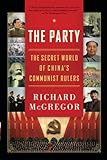
The Party
Richard McGregor
The secret world of China's Communist rulers and how the Party controls everything.
View on Amazon Listen on AudibleStart Here
India After Gandhi
Ramachandra Guha
The definitive history of the world's largest democracy since independence.
Listen on Audible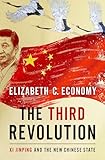 View on AmazonStart Here
The Third Revolution
Elizabeth C. Economy
Xi Jinping's ambition to remake China's political and economic model.
View on Amazon
As an Amazon Associate, PoliticaHub earns from qualifying purchases (including Audible) at no extra cost to you.
Connections
Topics
Artificial Intelligence
Emerging government frameworks for AI regulation, safety, workforce impact, and national competitiveness. A rapidly accelerating policy area with major economic and security implications.
Climate Policy
Government action to address climate change through emissions reduction, energy transition, carbon pricing, and international agreements. Intersects with energy, trade, and industrial policy.
Defense and Military
National defense spending, military alliances, arms procurement, and the use of armed forces abroad. Shapes a country's geopolitical posture and domestic budget priorities.
Digital Rights
Policy governing internet freedom, data privacy, surveillance, content moderation, and artificial intelligence regulation. A rapidly evolving area of governance with major implications for civil liberties.
Nuclear Weapons
Policy on nuclear arsenals, nonproliferation treaties, deterrence strategy, and disarmament. Nine states possess nuclear weapons, shaping global security architecture.
Press Freedom
The degree to which media can operate independently from government interference. Includes legal protections for journalists, media ownership rules, and state censorship policies.
Sanctions
Economic and diplomatic penalties imposed on states, organizations, or individuals to achieve foreign policy objectives. A primary tool of international statecraft.
Trade Policy
Government regulation of international commerce through tariffs, trade agreements, sanctions, and industrial policy. Balances domestic industry protection against global integration.
Offices
Chairman of the NPC Standing Committee
Presiding officer of the Standing Committee of the National People's Congress. Formally the highest-ranking legislator in China.
General Secretary of the Chinese Communist Party
The most powerful political position in China. Leader of the CCP, chair of the Politburo Standing Committee, and de facto paramount leader of the country.
Minister of Foreign Affairs of the People's Republic of China
Cabinet-level foreign policy office responsible for China's formal diplomacy and the Ministry of Foreign Affairs. In the Xi era, the office remains important but operates within a broader party-led foreign-policy hierarchy.
Premier of the People's Republic of China
Head of government and leader of the State Council. Oversees economic policy, administrative functions, and the day-to-day operation of the Chinese government.
President of the People's Republic of China
Formal head of state of the PRC. Largely ceremonial but always held concurrently by the CCP General Secretary since Jiang Zemin. Presidential term limits were removed in 2018.
Institutions
National People's Congress
The supreme organ of state power of the People's Republic of China and the national legislature. Meets annually with nearly 3,000 delegates. In practice, it ratifies decisions made by the CCP leadership.
CCP Politburo Standing Committee
The apex decision-making body of the Chinese Communist Party and effectively the most powerful political institution in China. Currently comprises seven members led by the General Secretary.
Country Feedback
Trust & Coverage
- Page Type
- Country
- Last Updated
- April 15, 2026
- Sources
- 2 linked
Country data is assembled from structured entity records, election results, and office timelines.
También puedes explorar
A4 Alliance
political alliance in Hong Kong
Alliance for Change
political party in Macau
Alliance of Resuming British Sovereignty over Hong Kong and Independence
political party in Hong Kong
Association for Democracy and Social Well-Being of Macau
political party in Macau
Association for Helping the Community and Engagement with the People
Political party in People's Republic of China.
Bauhinia Party
Hong Kong pro-Beijing conservative political party