
PoliticaHub Reference Sheet
Republican Party
Party · Printed May 12, 2026 · politicahub.com/party/republican-party-us
The Republican Party was founded in the 1850s as the principal national anti-slavery alternative to the Democrats and reached the presidency with Abraham Lincoln in 1860. Across the twentieth century it evolved from a party of Union, business, and anti-communism into the modern conservative coalition associated with lower taxes, deregulation, evangelical and social-conservative activism, hawkish law-and-order politics, and the Reagan-era reordering of the American right. In the Trump era the GOP became even more explicitly populist and nationalist, putting immigration restriction, cultural grievance politics, judicial conservatism, skepticism toward older party elites, and personal loyalty to Trump-aligned politics at the center of its national identity.
Key Facts
| founded year | 1854 |
| overview | Modern Republican politics contains several overlapping traditions that do not always sit comfortably together. One is the older Reagan-Bush establishment: donor-oriented, market-focused, tax-cutting, business-friendly, internationalist, and rhetorically committed to small government. A second is the religious and social-conservative current associated with the Christian right, anti-abortion mobilization, school and family politics, and the long project of reshaping the federal courts. A third is the libertarian and anti-regulatory current associated with thinkers and politicians who prioritize spending restraint, deregulation, gun rights, and suspicion of executive and bureaucratic power. A fourth is the national-security hawkish tradition built through the Cold War and post-9/11 eras. The fifth and currently dominant current is the Trump-aligned populist-nationalist wing. This faction is less interested in older fusionist conservatism and more interested in sovereignty, border control, trade protection, anti-woke politics, anti-elite rhetoric, direct combat with universities and media institutions, and the idea that the right should use state power more assertively. Figures such as Donald Trump, J.D. Vance, Ron DeSantis, Josh Hawley, and parts of the MAGA ecosystem embody that evolution, even though they differ among themselves on foreign policy, entitlement politics, and relations with business. The result is a party that still wins many votes on traditional conservative grounds but is no longer psychologically organized around Chamber-of-Commerce Republicanism. It is now a party of the right whose deepest energy comes from nationalism, cultural conflict, distrust of liberal institutions, and the belief that older Republican elites were too restrained, too globalist, or too deferential to establishment norms. |
| party leader | Joe Gruters (Republican National Committee chair since August 22, 2025) |
| search aliases | Republicans, GOP, Grand Old Party, US Republicans, Republican Party USA, Trump party |
Frequently Asked Questions
- Q: What ideology does Republican Party follow?
- A: Republican Party is ideologically aligned with Conservatism.
- Q: When was Republican Party founded?
- A: Republican Party was founded in 1854, about 172 years ago.
- Q: Who is associated with Republican Party?
- A: Politicians connected to Republican Party on this site include Abraham Lincoln, Barry Goldwater, Bob Dole, Dan Quayle, Dennis Hastert.
- Q: Where does Republican Party operate?
- A: Republican Party operates in United States.
- Q: What policy topics does Republican Party focus on?
- A: Republican Party has stated positions on Abortion, Defense and Military, Gun Policy, Immigration, and 1 others.
- Q: What is Republican Party?
- A: The Republican Party was founded in the 1850s as the principal national anti-slavery alternative to the Democrats and reached the presidency with Abraham Lincoln in 1860. Across the twentieth century it evolved from a party of Union, business, and anti-communism into the modern conservative coalition associated with lower taxes, deregulation, evangelical and social-conservative activism, hawkish law-and-order politics, and the Reagan-era reordering of the American right. In the Trump era the GOP became even more explicitly populist and nationalist, putting immigration restriction, cultural grievance politics, judicial conservatism, skepticism toward older party elites, and personal loyalty to Trump-aligned politics at the center of its national identity.
Source: politicahub.com/party/republican-party-us
Republican Party: What It Wants, What Changes & What It Means for Your Life
The Republican Party wants lower taxes, stricter border enforcement, less federal welfare expansion, stronger policing, and a more conservative federal stance on rights and institutions.

ByNorth
The Republican Party wants lower taxes, stricter border enforcement, less federal welfare expansion, stronger policing, and a more conservative federal stance on rights and institutions.
The Republican Party is the major U.S. right-of-center party. The real search intent is practical: what changes if it wins? Expect a harder border and policing state, fewer federal guarantees on abortion and social support, lower-tax politics, a friendlier line to fossil fuels, and more power flowing back to states on contested rights questions.
United StatesFounded 1854Conservatism
The party of border enforcement, tax resistance, cultural conservatism, and a more punitive state
The Republicans want less federal welfare ambition, more border and police power, lower taxes, and a politics that treats progressive institutions as the problem rather than the solution. Their core message is that everyday life gets better when Washington backs off economically and hits harder culturally and coercively.
If they win, what changes?
- 01
Taxes and the federal state
Keep more money in private hands and shrink Washington's domestic reach.
How: Oppose higher taxes on top earners, reject universal-health and student-debt expansion, and treat federal redistribution as a drag on growth and responsibility.
- 02
Borders and elections
Make control, verification, and enforcement defining features of public life.
How: Support more border wall, reject broad paths to citizenship, and push stronger voter-ID requirements as part of a wider politics of verification.
- 03
Culture and rights
Roll back progressive federal guarantees in the name of states, tradition, and parental or religious authority.
How: Oppose federal abortion protections, reject court expansion, and keep distance from the broad rights-maximizing approach of Democrats.
- 04
Energy, trade, and policing
Favor fossil energy, tariffs on rivals, and visible law-and-order politics.
How: Oppose phasing out fossil extraction, support broader China tariffs, and increase federal support for local police rather than treat criminal justice mainly as a reform project.
What this means for your life
This is the voter version of the platform: where the party is most likely to show up in your bills, services, work, safety, and day-to-day social climate.
Your paycheck and benefits: If you are higher-income or want fewer federal taxes and less federal redistribution, this party makes life easier. If you rely on federal supports, debt relief, or broader public coverage, it gets harder.
Immigration and civic life: Expect a more enforcement-led state: harder borders, tighter eligibility, and a political climate built more around exclusion, ID, and suspicion than around legalization or inclusion.
Abortion, rights, and institutions: For many voters, the biggest everyday impact is rights moving out of federal protection and back into state conflict. That means your zip code matters more.
Energy, policing, and public order: You would likely get cheaper political treatment of fossil fuels, more support for police, and less emphasis on climate and institutional reform as priorities over order and national strength.
Where they break from the norm
Today's Republican Party is not just the party of tax cuts. It is a coalition built around border enforcement, institutional confrontation, cultural rollback, and a belief that public order matters more than broad federal social guarantees.
الأسئلة الشائعة
- What does the Republican Party want?
- The Republican Party wants lower taxes, stricter immigration enforcement, less federal social spending, stronger policing, looser treatment of fossil-fuel production, and a more conservative approach to federal rights policy.
- Would Republicans lower taxes?
- Republicans are more likely than Democrats to oppose tax increases and to push tax relief, especially by resisting redistribution through higher federal taxation.
- What would change in daily life if Republicans win?
- You would likely see tougher border policy, more law-and-order politics, fewer new federal social guarantees, less climate regulation, and a greater chance that abortion and civil-rights protections vary by state.
- Are Republicans conservative?
- Yes. The Republican Party is the main conservative party in the United States, though it currently combines traditional business conservatism with a more populist, nationalist, and culture-war wing than in earlier decades.
- What ideology does Republican Party follow?
- Republican Party is ideologically aligned with Conservatism.
- When was Republican Party founded?
- Republican Party was founded in 1854, about 172 years ago.
Party Timeline
1854
Republican Party founded in anti-slavery revolt
The Republican Party emerged from anti-Nebraska outrage and the collapse of older Whig alignments, uniting anti-slavery Whigs, Free Soilers, and anti-slavery Democrats. Its founding purpose was to stop the expansion of slavery, defend free labor, and build a new national majority against the political dominance of the slaveholding South.
1860–1865
Lincoln, Union victory, and emancipation
Abraham Lincoln's election brought the party to power at the moment of secession and civil war. Under Republican leadership the Union was preserved, slavery was destroyed, and the federal government expanded dramatically in war finance, railroad development, and constitutional transformation.
1865–1877
Reconstruction and its limits
Republicans passed the Reconstruction Amendments and briefly attempted to create a biracial constitutional order in the South. This remains one of the most consequential and unfinished projects in party history: a moment of genuine federal commitment to Black citizenship that was later abandoned under violence, fatigue, and political retreat.
1890s–1920s
Industrial and business Republicanism consolidates
As the nineteenth century closed, Republicans became more strongly associated with industrial growth, tariffs, business interests, and national development. The party of Lincoln increasingly became the party of northern prosperity, financial power, and what many voters understood as order, expansion, and modern economic scale.
1901–1909
Theodore Roosevelt shows an activist Republican path
Roosevelt represented a different Republican possibility: nationalist, reformist, trust-busting, and willing to use the federal state assertively. His presidency left a lasting mark on conservation, executive power, and the idea that Republicanism did not have to mean simple passivity in the face of concentrated economic power.
1953–1961
Eisenhower era of moderate Republican governance
Dwight Eisenhower accepted much of the postwar state while governing from the center-right. Under him the Interstate Highway System expanded, U.S. Cold War leadership deepened, and the party demonstrated that mid-century Republicanism could be anti-communist and fiscally cautious without fully repudiating the New Deal order.
1964
Goldwater launches the modern ideological right
Barry Goldwater lost badly in 1964, but his campaign was a watershed because it nationalized a new conservative identity: anti-statist, anti-liberal, constitutionalist, and militant in its rhetoric against the federal welfare state. The coalition he helped assemble became the foundation for the Reagan revolution.
1968–1974
Nixon reshapes the electoral map
Richard Nixon fused law-and-order politics, anti-elite resentment, Cold War realism, and the Southern Strategy into a new Republican electoral formula. His presidency also accelerated the movement of many white Southern voters and culturally conservative suburbanites into the GOP.
1980
Reagan coalition defines late-twentieth-century Republicanism
Ronald Reagan united free-market economics, anti-tax activism, evangelical conservatism, anti-communist nationalism, and an optimistic rhetoric of American restoration. Tax cuts, deregulation, anti-union symbolism, and judicial conservatism became central markers of what modern Republican success looked like.
1994
Gingrich congressional revolution hardens party combat
Newt Gingrich's House takeover turned Republicans into a more parliamentary, confrontational, and media-driven opposition party. The GOP became less deferential to institutional bargaining norms and more willing to use procedural warfare, messaging discipline, and nationalized congressional conflict as a governing style.
2001–2008
Bush era marries tax cuts, security state, and evangelical politics
George W. Bush added compassionate-conservative rhetoric, major tax cuts, education reform, faith-friendly politics, and the post-9/11 war presidency. The Iraq War, the expansion of executive security powers, and the financial crisis later badly damaged the establishment Republican brand.
2016
Trump captures and remakes the party
Donald Trump defeated the old Republican field by combining immigration restriction, trade skepticism, celebrity politics, anti-establishment aggression, and direct cultural combat. He did not erase older Republican priorities such as tax cuts and conservative judges, but he reordered the party around populist nationalism, personal loyalty, and hostility to elite institutions.
2020–2021
Election denial and institutional rupture
Trump's refusal to accept defeat and the January 6 attack marked a historic stress test for the party and the constitutional order. Many Republicans rejected the violence while still remaining inside a party increasingly unwilling to sever itself from Trump's claims and political dominance.
2024–present
MAGA dominance and the post-Reagan right
Trump's return to the presidency confirmed that the party's center of gravity had shifted decisively away from the older Bush-Romney-Ryan establishment. J.D. Vance, Mike Johnson, Ron DeSantis, Marco Rubio, Nikki Haley, Ted Cruz, Josh Hawley, and others now compete inside a party where the key question is no longer whether it will be populist-nationalist, but how that populism will be translated into governing power, institutional conflict, and succession after Trump.
Overview
Modern Republican politics contains several overlapping traditions that do not always sit comfortably together. One is the older Reagan-Bush establishment: donor-oriented, market-focused, tax-cutting, business-friendly, internationalist, and rhetorically committed to small government. A second is the religious and social-conservative current associated with the Christian right, anti-abortion mobilization, school and family politics, and the long project of reshaping the federal courts. A third is the libertarian and anti-regulatory current associated with thinkers and politicians who prioritize spending restraint, deregulation, gun rights, and suspicion of executive and bureaucratic power. A fourth is the national-security hawkish tradition built through the Cold War and post-9/11 eras.
The fifth and currently dominant current is the Trump-aligned populist-nationalist wing. This faction is less interested in older fusionist conservatism and more interested in sovereignty, border control, trade protection, anti-woke politics, anti-elite rhetoric, direct combat with universities and media institutions, and the idea that the right should use state power more assertively. Figures such as Donald Trump, J.D. Vance, Ron DeSantis, Josh Hawley, and parts of the MAGA ecosystem embody that evolution, even though they differ among themselves on foreign policy, entitlement politics, and relations with business.
The result is a party that still wins many votes on traditional conservative grounds but is no longer psychologically organized around Chamber-of-Commerce Republicanism. It is now a party of the right whose deepest energy comes from nationalism, cultural conflict, distrust of liberal institutions, and the belief that older Republican elites were too restrained, too globalist, or too deferential to establishment norms.
Related people, parties, or institutions mentioned in the page.

United States
Federal presidential republic and the world's largest economy, with power divided among the presidency, Congress, the states, and the federal courts. U.S. politics is highly polarized, two-party dominated, and globally consequential because decisions made in Washington shape finance, trade, security alliances, technology regulation, and military power far beyond U.S. borders.
.jpg)
Donald Trump
45th and 47th President of the United States. Businessman and media figure who reshaped the Republican Party.
Why It Was Founded
The Republican Party was created in 1854 to stop the extension of slavery into the western territories and quickly became the national political home of anti-slavery Whigs, Free Soilers, and anti-Nebraska Democrats. Its original purpose was therefore moral, constitutional, and national at once: contain slavery, preserve the Union on free-labor principles, and build a durable majority against what Republicans saw as the domination of the federal government by the slave power.
In the modern era the party's institutional purpose has changed dramatically. It now functions as the principal electoral vehicle of the American right, uniting business conservatives, religious conservatives, nationalists, immigration hawks, gun-rights advocates, anti-regulatory activists, and a judicial movement committed to originalist and conservative constitutional interpretation. The party's modern mission is less about free-labor ideology than about winning and exercising power for a coalition that seeks lower taxes, less domestic regulation, stronger border enforcement, conservative courts, and a more explicitly nationalist understanding of American identity and sovereignty.
Party History
The Republican Party's history is one of ideological recomposition rather than one continuous conservative essence. It began as the party of Abraham Lincoln, Union victory, emancipation, and Reconstruction. In its first phase it was associated with free labor, national development, railroad expansion, protective tariffs, and a stronger federal state than later Republicans would celebrate. That early Republican coalition also contained radicals, moderates, industrial modernizers, veterans' interests, and reformers whose priorities would not fit neatly inside the modern right.
After Reconstruction, Republicans became increasingly associated with northern business power, industrial capitalism, tariffs, and eventually the political cultures of prosperity, order, and anti-machine reform. Theodore Roosevelt represented one possible Republican future: activist, nationalist, reformist, and willing to use federal power aggressively. But the longer twentieth-century line of party development moved more strongly toward business conservatism, anti-New Deal politics, and resistance to expanding federal social obligations, even though figures like Dwight Eisenhower governed more moderately than later party mythology sometimes admits.
The party's modern conservative identity took shape through backlash against the New Deal, the Cold War, the civil-rights realignment, and the rise of Sun Belt conservatism. Barry Goldwater's 1964 defeat was strategically foundational because it nationalized a new ideological right around anti-statism, anti-communism, and militant constitutional conservatism. Richard Nixon added a law-and-order and Southern Strategy dimension, appealing to white voters unsettled by racial liberalization and cultural upheaval. Ronald Reagan then fused business conservatism, anti-tax politics, religious conservatism, hawkish anti-communism, and sunny nationalist rhetoric into the dominant late-twentieth-century Republican synthesis.
The post-Reagan GOP went through two more decisive transformations. Under Newt Gingrich it became more confrontational, parliamentary, and media-driven; under George W. Bush it combined tax cuts, evangelical politics, and assertive foreign intervention after September 11. The Trump era then reordered the coalition again. Donald Trump did not abolish older Republican priorities such as conservative judges and tax cuts, but he displaced the party's tone, hierarchy, and center of gravity with populist nationalism, immigration restriction, trade skepticism, personal loyalty tests, election denialism in part of the party, and intense hostility toward administrative, media, academic, and cultural elites.
That is why the current GOP cannot be understood simply as Reaganism with louder rhetoric. It contains old conservatives, libertarians, evangelicals, Wall Street and donor-class interests, national-security hawks, and local-machine Republicans, but its dominant emotional force now comes from Trump-aligned populism and the argument that conservative politics should be less about limiting the state in theory and more about using power aggressively in culture, immigration, trade, and institutional conflict.
Core Beliefs
Republicans generally support lower taxes, less domestic regulation, conservative constitutional interpretation, expansive protections for gun ownership, stricter immigration enforcement, and a cultural politics centered on religion, patriotism, public order, and skepticism toward progressive institutions. The party also remains strongly committed to the judiciary as a long-term instrument of ideological power, which is why judicial nominations, legal movements, and constitutional language have mattered so much to Republican coalition maintenance.
The biggest internal argument is not whether the party is conservative, but what kind of conservatism should dominate. One side favors business-oriented, donor-friendly, internationalist, and procedurally conventional conservatism. The other favors nationalist, protectionist, immigration-centered, culturally militant conservatism that is more willing to use executive and state power aggressively. That argument shapes debates over Ukraine, tariffs, entitlement politics, industrial policy, Silicon Valley, abortion messaging, and how confrontational the party should be toward constitutional and administrative norms.
Policy Examples
The Republican Party's major achievements and legacy policies span very different historical eras. In its founding phase, Republicans led the Union war effort under Abraham Lincoln, ended slavery through the Thirteenth Amendment, backed the Fourteenth and Fifteenth Amendments, and briefly attempted to construct a biracial constitutional order in the South through Reconstruction. Later Republican governments were central to protective-tariff industrial development, railroad expansion, and the long association between the party and business-led national growth.
Twentieth-century Republican accomplishments are more ideologically mixed than the party's current rhetoric sometimes suggests. Theodore Roosevelt used federal authority for trust-busting and conservation. Dwight Eisenhower presided over the Interstate Highway System and accepted much of the basic New Deal settlement while maintaining anti-communist international leadership. The late twentieth-century conservative GOP, however, defined success differently: Ronald Reagan's tax revolts, deregulatory momentum, anti-union symbolism, and judicial and rhetorical restoration of the right became the core achievements celebrated by modern conservatives.
More recent Republican policy victories include the 1996 welfare overhaul achieved through bargaining between a Republican Congress and Bill Clinton, the Bush tax cuts, the conservative legal movement's capture of the federal judiciary, and the Dobbs-era reversal of Roe v. Wade made possible by Republican judicial appointments. Donald Trump's first presidency added major tax cuts, a more restrictionist border and asylum agenda, China tariffs, and a durable transformation of the party's policy language around trade, immigration, and executive confrontation with liberal institutions.
Notable Examples
The party's iconic figures include Abraham Lincoln and the Civil War generation; Ulysses S. Grant and the Reconstruction state; Theodore Roosevelt and the activist nationalist-progressive variant of early Republicanism; Robert Taft and old-right anti-New Deal conservatism; Dwight Eisenhower's postwar moderation; Barry Goldwater and the ideological right; Richard Nixon's law-and-order and Southern Strategy politics; Ronald Reagan as the architect of the late-twentieth-century conservative synthesis; Newt Gingrich's confrontational congressional revolution; George H.W. Bush and George W. Bush as representatives of establishment Republican governance; and Donald Trump as the dominant figure in the party's populist-nationalist realignment.
Other influential Republicans matter because they shaped institutions, factions, and style. Mitch McConnell turned judicial politics into the party's most successful long game. Paul Ryan represented the policy-intellectual and fiscal-conservative wing of the pre-Trump party. Mike Johnson reflects the party's contemporary mix of social conservatism and institutional partisanship. Nikki Haley, Marco Rubio, Ted Cruz, Rand Paul, Ron DeSantis, and J.D. Vance each represent different possible futures for the party: hawkish establishment conservatism, national-conservative populism, libertarian-inflected anti-establishment politics, executive culture-war confrontation, and post-liberal right populism.
Read together, these figures show that the Republican Party is not just the party of 'conservatism' in the abstract. It is a coalition that has contained free-labor nationalism, business conservatism, anti-communism, religious conservatism, libertarianism, neoconservatism, and now a populist-nationalist movement that has subordinated much of the party hierarchy to Trump-era political instincts.
Learn More
Two books worth reading
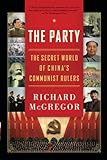 View on AmazonStart Here
The Party
Richard McGregor
The secret world of China's Communist rulers and how the Party controls everything.
View on Amazon Listen on AudibleDeeper History
Political Parties
Giovanni Sartori
The classic framework for understanding how party systems form and compete.
Listen on Audible
As an Amazon Associate, PoliticaHub earns from qualifying purchases (including Audible) at no extra cost to you.
Connections
Policy Topics
Abortion
Legal and political frameworks governing access to abortion services. One of the most contested social policy issues globally, intersecting with religion, women's rights, and constitutional law.
Defense and Military
National defense spending, military alliances, arms procurement, and the use of armed forces abroad. Shapes a country's geopolitical posture and domestic budget priorities.
Gun Policy
Laws governing firearm ownership, licensing, sales, and use. Ranges from near-total bans to broad constitutional protections. Especially prominent in U.S. politics.
Immigration
Policy governing the movement of people across borders, including asylum, work permits, citizenship pathways, and border enforcement. One of the most polarizing issues in democracies worldwide.
Taxation
How governments raise revenue through income, corporate, consumption, and wealth taxes. Tax policy reflects fundamental choices about redistribution, economic incentives, and the size of government.
Members
Abraham Lincoln
Sixteenth President of the United States (1809–1865) who led the nation through the Civil War and issued the Emancipation Proclamation, abolishing slavery in the Confederate states. His assassination at Ford's Theatre made him a martyr of national unity and is widely ranked the greatest American president.
Barry Goldwater
Republican senator from Arizona and 1964 presidential nominee. Lost to Johnson in a landslide but laid the intellectual groundwork for modern American conservatism.
Bob Dole
Republican senator from Kansas and Senate Majority Leader. 1996 presidential nominee defeated by Bill Clinton.
Dan Quayle
Vice President of the United States from 1989 to 1993 under George H.W. Bush. Former Indiana senator.
Dennis Hastert
Speaker of the U.S. House of Representatives from 1999 to 2007. Longest-serving Republican Speaker.
Dick Cheney
Vice President of the United States from 2001 to 2009. Former secretary of defense and influential Republican strategist.
Donald Trump
45th and 47th President of the United States. Businessman and media figure who reshaped the Republican Party.
Dwight D. Eisenhower
Thirty-fourth President of the United States (1890–1969) and Supreme Allied Commander during World War II who presided over a decade of Cold War stability. His farewell address warning of the "military-industrial complex" remains one of the most prescient political statements of the 20th century.
George H.W. Bush
41st President of the United States from 1989 to 1993. Former CIA director and vice president who led during the end of the Cold War and the Gulf War.
George W. Bush
43rd President of the United States from 2001 to 2009. Republican leader during the September 11 attacks, the Afghanistan War, and the Iraq War.
Gerald Ford
38th President of the United States from 1974 to 1977. The only president never elected as either president or vice president, ascending through the Twenty-Fifth Amendment.
J.D. Vance
Vice President of the United States since January 20, 2025 and one of the clearest faces of the Republican Party's populist-nationalist turn. Vance moved unusually quickly from author and venture-capital figure to senator and then vice president.
John Boehner
Speaker of the U.S. House of Representatives from 2011 to 2015. Republican leader who struggled with Tea Party divisions within his caucus.
John McCain
Republican senator from Arizona and 2008 presidential nominee. Prominent foreign policy voice in the Senate.
Kevin McCarthy
Republican representative from California who served briefly as Speaker of the U.S. House of Representatives in 2023.
Marco Rubio
American Republican senator from Florida who ran for president in 2016. He became Secretary of State in the Trump administration in 2025 as the first Hispanic to hold the role.
Mike Johnson
Speaker of the U.S. House of Representatives since October 25, 2023. Johnson became a central figure in Washington after the House Republican conference elevated him during its 2023 speaker crisis.
Mike Pence
Vice President of the United States from 2017 to 2021. Former governor of Indiana and congressional conservative.
Mitch McConnell
Republican senator from Kentucky and the longest-serving party leader in U.S. Senate history. McConnell shaped the federal judiciary, Senate procedure, and Republican strategy for much of the Obama, Trump, and Biden eras.
Mitt Romney
Former governor of Massachusetts, Republican nominee in the 2012 presidential election, and later U.S. senator from Utah.
Nelson Rockefeller
Vice President of the United States from 1974 to 1977. Appointed under the Twenty-Fifth Amendment by Gerald Ford. Former governor of New York.
Newt Gingrich
Speaker of the U.S. House of Representatives from 1995 to 1999. Architect of the Republican Revolution of 1994 and the Contract with America.
Nikki Haley
American politician of Indian heritage who served as Governor of South Carolina and UN Ambassador under Trump. She ran for the Republican presidential nomination in 2024, outlasting most rivals before losing to Trump.
Paul Ryan
Speaker of the U.S. House of Representatives from 2015 to 2019. Former vice presidential nominee and Republican fiscal policy leader.
Rand Paul
American Republican senator from Kentucky and ophthalmologist who is a libertarian-leaning conservative. Son of Ron Paul, he ran for the 2016 presidential nomination and is known for challenging foreign interventionism.
Richard Nixon
37th President of the United States from 1969 to 1974. Opened diplomatic relations with China, but resigned over the Watergate scandal — the only president to resign from office.
Ron DeSantis
Governor of Florida and major Republican national figure who sought the 2024 presidential nomination.
Ronald Reagan
40th President of the United States from 1981 to 1989. Former California governor and actor who reshaped the Republican Party around conservative economics and anti-communism.
Spiro Agnew
Vice President of the United States from 1969 to 1973. Resigned amid a corruption investigation, the first modern VP resignation.
Ted Cruz
American Republican senator from Texas and constitutional lawyer who ran for the presidential nomination in 2016, ultimately losing to Donald Trump. Known for his social conservative and libertarian positions.
Vivek Ramaswamy
American entrepreneur and politician who ran for the Republican presidential nomination in 2024. He later co-led the Department of Government Efficiency (DOGE) with Elon Musk in the Trump administration.
Party Feedback
Trust & Coverage
- Page Type
- Party
- Last Updated
- April 15, 2026
- Sources
- 2 linked
This page is generated from structured entity, relationship, and metadata records.
Coverage is still growing country by country, so some timelines and relationships may be incomplete.
قد ترغب أيضاً في الاستكشاف
Conservatism
Political tradition that values continuity, inherited institutions, social order, and gradual change over sweeping redesign. Conservative movements differ across countries, but they commonly defend tradition, authority, private property, and skepticism toward utopian politics.
United States
Federal presidential republic and the world's largest economy, with power divided among the presidency, Congress, the states, and the federal courts. U.S. politics is highly polarized, two-party dominated, and globally consequential because decisions made in Washington shape finance, trade, security alliances, technology regulation, and military power far beyond U.S. borders.
Abortion
Legal and political frameworks governing access to abortion services. One of the most contested social policy issues globally, intersecting with religion, women's rights, and constitutional law.
Defense and Military
National defense spending, military alliances, arms procurement, and the use of armed forces abroad. Shapes a country's geopolitical posture and domestic budget priorities.
Gun Policy
Laws governing firearm ownership, licensing, sales, and use. Ranges from near-total bans to broad constitutional protections. Especially prominent in U.S. politics.
Immigration
Policy governing the movement of people across borders, including asylum, work permits, citizenship pathways, and border enforcement. One of the most polarizing issues in democracies worldwide.