
United States Political System & Government Explained
The United States is easiest to misunderstand when it is described as one national democracy with one center of power. In practice it is a presidential system layered on top of fifty powerful states, a muscular court system, and two loose parties that are broad coalitions rather than disciplined governing machines.
How Power Really Works
The first thing to understand about the United States is that winning the presidency does not mean controlling the state. A president can command the military, set the tone of foreign policy, appoint thousands of officials, and steer the federal bureaucracy, but Congress writes the laws and the money bills, the courts can freeze or reverse major initiatives, and state governments control huge parts of daily public life. American politics is therefore a constant fight over who can block whom, not just who won the last election.
That design produces a system full of veto points. The House and Senate can be controlled by different parties. The Senate gives small states the same representation as huge ones. Governors and state legislatures can resist federal priorities. The Supreme Court can turn a political defeat into a constitutional one. If you want to know why American politics feels permanently unsettled, start there: the system was built to prevent concentration of power, and in modern conditions that often means it also prevents clear governing authority.
Why Policy So Often Stalls
American parties are strong enough to polarize the system and weak enough to govern it badly. Democrats and Republicans are less like disciplined parliamentary parties and more like giant electoral tents held together by primaries, donor networks, activist groups, media ecosystems, and regional interests. That makes internal fights almost as important as general elections. Presidents have to manage Congress, but they also have to manage their own side.
The result is a country that can generate endless political conflict without producing much durable legislation. When Congress is deadlocked, presidents lean on executive orders, agencies, and emergency powers. Then courts step in, or the next administration reverses course, or Congress refuses to fund the policy fully. The pattern keeps repeating: grand promises, partial implementation, litigation, reversal. That is why so many American battles migrate from Parliament-style bargaining into courts, state capitols, and administrative agencies.
The States Are Part of the Story
The United States is federal in a much harder-edged way than outsiders often assume. States run elections, police large parts of public order, write criminal law, administer schools, and shape access to healthcare, abortion, labor protections, and voting. That means the country can look like one polity during a presidential campaign and like fifty different political systems once policy is implemented.
This is why major national questions are often fought twice: once in Washington and again state by state. Immigration enforcement, abortion rights, redistricting, gun regulation, environmental rules, and election administration all turn into layered battles between federal agencies, state governments, and courts. Anyone trying to understand the country only from the White House or Capitol Hill is missing half the map.
What To Watch
Watch the widening gap between what presidents are expected to do and what the constitutional system lets them do cleanly. The pressure to govern by executive action keeps rising because Congress is slow, polarized, and often incapable of building stable majorities. That makes every election feel existential, because losing the presidency can mean immediate administrative reversal even when the underlying law barely changes.
Also watch the legitimacy question. The Electoral College, the Senate, lifetime judicial appointments, aggressive redistricting, and the difficulty of amending the Constitution all make it possible for national power to drift away from national majorities. The United States is not just arguing about policy. It is arguing about whether its eighteenth-century constitutional machinery can still carry twenty-first-century democratic expectations.
Political Architecture
How the United States Is Structured
The executive, legislature, elections, parties, and institutions that make up the United States political system — and how they connect.
Dig Deeper
Position in System
United States is organized as a federal system, dividing political authority between a national government and constituent regions. This structure allows significant regional autonomy while maintaining unified national policy on defense, trade, and foreign affairs. The system operates through 5 tracked political offices and 5 institutions, which collectively define how authority is exercised, checked, and transferred.
هل تعلم؟
- Still governed by the constitution written in 1788.
- 578 political parties compete for just 5 tracked elected offices.
Election Tracker
All electionsUS 2024 Presidential Election
United States presidential election held November 2024. Trump won the presidency for a second time.
US 2020 Presidential Election
United States presidential election held November 2020. Joe Biden defeated Donald Trump.
US 2016 Presidential Election
United States presidential election held November 2016. Donald Trump defeated Hillary Clinton.
US 2012 Presidential Election
United States presidential election held November 2012. Barack Obama defeated Mitt Romney to win a second term.
Political Parties
All 578 partiesAfrican People's Socialist Party
far-left pan-Africanist organization in the United States
Đại Việt Nationalist Party
political party from Vietnam, now active in exile
Alabama Democratic Party
Affiliate of the Democratic Party in Alabama
Alabama National Democratic Party
segregationist political party
Alabama Republican Party
Alabama affiliate of the Republican Party
Alaska Democratic Party
major political party in the U.S. state of Alaska
Related Scenarios
united states
What happens if a constitutional amendment is proposed in the United States?
→Amending the U.S. Constitution is deliberately difficult, requiring supermajority support at both the proposal and ratification stages. The process has only succeeded 27 times in over 230 years.
united states
What happens if a U.S. President is impeached?
→Impeachment is the constitutional process for charging a president with serious misconduct and potentially removing them from office.
united states
What happens if a U.S. state tries to secede?
→The question of whether states can leave the Union was effectively settled by the Civil War and Supreme Court precedent, but the legal, political, and institutional consequences of a modern secession attempt remain a subject of intense debate.
united states
What happens if a U.S. Supreme Court justice is impeached?
→Supreme Court justices serve during good behaviour and can be removed through the same impeachment process used for presidents, though it has never resulted in removal of a justice.
united states
What happens if a U.S. Supreme Court seat opens in an election year?
→A Supreme Court vacancy in an election year triggers a constitutionally simple but politically explosive sequence: presidential nomination, Senate confirmation choice, and a fight over timing and legitimacy.
united states
What happens if electoral votes are disputed in Congress?
→Congress counts electoral votes in a joint session, but objections, competing slates, and certification fights can turn that final stage into a constitutional stress test.
united states
What happens if martial law is declared in the United States?
→Martial law refers to military involvement in civil governance during an extreme emergency, but the U.S. Constitution does not create a single, unlimited federal martial-law power.
united states
What happens if the 25th Amendment is invoked against the U.S. President?
→The Twenty-Fifth Amendment provides a mechanism for transferring presidential power when the president is unable to discharge the duties of office, either voluntarily or through action by the vice president and cabinet.
united states
What happens if the House has to choose the U.S. President?
→If no presidential candidate wins an Electoral College majority, the election moves into a contingent process in the House of Representatives with each state delegation casting one vote.
united states
What happens if the U.S. activates the military draft?
→The United States has not used conscription since 1973, but the legal and institutional framework for a draft remains in place through the Selective Service System. Activating it would require congressional action and would be one of the most politically explosive decisions in modern American history.
united states
What happens if the U.S. Electoral College ends in a tie?
→If no presidential ticket wins an Electoral College majority, the election moves into a contingent procedure in Congress under the Twelfth Amendment.
united states
What happens if the U.S. government shuts down?
→A federal government shutdown happens when Congress does not pass appropriations or a funding extension for some parts of the government before existing funding expires.
united states
What happens if the U.S. invokes NATO Article 5?
→Article 5 is NATO's collective defence clause — an attack on one member is considered an attack on all. It has been invoked only once, by the United States after the September 11, 2001 attacks.
united states
What happens if the U.S. President cannot serve?
→The Constitution and federal law establish a succession process if a president dies, resigns, is removed, or is otherwise unable to perform the duties of the office.
united states
What happens if the U.S. President declares a national emergency?
→A national emergency declaration activates statutory emergency powers that Congress has already provided, but it does not automatically suspend the Constitution or ordinary democratic institutions.
united states
What happens if the U.S. Senate eliminates the filibuster?
→The filibuster is a Senate procedural tool that effectively requires 60 votes to advance most legislation. Eliminating it would transform the Senate from a supermajority institution to a simple-majority body.
united states
What happens if the United States declares war?
→The Constitution gives Congress the exclusive power to declare war, but the last formal declaration was in 1942. Modern conflicts have been conducted under presidential authority, authorizations for use of military force, and emergency powers.
united states
What happens if the United States uses conscription during war?
→The United States currently requires registration with the Selective Service System, but an actual draft would require Congress and the president to activate conscription under federal law.
Learn More
الأسئلة الشائعة
- What type of government does the United States have?
- The United States has a federal presidential constitutional republic. Power is divided between the federal government and 50 state governments, with separation of powers among the executive, legislative, and judicial branches.
- Who is the current president of the United States?
- Donald Trump is the 47th president of the United States, having taken office in January 2025 after winning the 2024 presidential election.
- What are the two major political parties in the United States?
- The two major parties are the Republican Party and the Democratic Party. Together they have dominated American politics since the mid-19th century.
- How does the US electoral system work?
- The president is elected through the Electoral College, where each state has electors proportional to its congressional representation. Members of Congress are elected by direct popular vote in their districts (House) or states (Senate).
- How often are US elections held?
- Presidential elections are held every four years. All 435 House seats are up every two years, and roughly one-third of the 100 Senate seats are contested every two years.
- What type of government does United States have?
- United States is a Federal presidential constitutional republic. This system defines how executive, legislative, and judicial power is organized and exercised in the country. A federal system divides power between a central government and regional units, allowing for local autonomy within a unified national framework.
ByNorth
Verdict: The United States operates as a federal presidential republic with power divided between the presidency, Congress, and an independent judiciary.
The United States is a federal presidential constitutional republic. Executive power rests with the president, legislative power with a bicameral Congress (Senate and House of Representatives), and judicial power with the Supreme Court and federal courts. National politics is dominated by the Democratic and Republican parties.
This page resolves the most common search intents around the American political system before moving into government structure, key institutions, elections, and party landscape.
The United States has the world's largest defense budget and maintains military bases across every continent.
United States
- القوة العسكرية
- Unmatched
- ميزانية الدفاع
- ~$886 billion
- القوات العاملة
- ~1,328,000
- النفوذ العالمي
- Very High
الخلاصة. The only military with truly global force projection: the largest defense budget on earth, a worldwide network of bases, the full nuclear triad, and the alliance command structures other powers plug into.
Defense spending uses SIPRI-backed 2024 estimates; personnel uses IISS-backed counts.
- Donald TrumpSee the profile of the current US president and his political trajectory.
- Republican PartyExplore the ruling party's ideology, history, and electoral performance.
- Democratic PartySee how the main opposition party compares in policy and electoral strength.
- US ElectionsTrack past and upcoming US elections from presidential races to midterms.
- U.S. President vs U.K. Prime MinisterA comparison of two powerful democratic offices that sit in very different constitutional systems: one presidential, one parliamentary.
- Bundestag vs U.S. CongressA comparison between Germany’s parliamentary legislature and the United States’ presidential legislature.
Three books worth reading
 View on AmazonStart Here
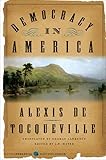
Democracy in America
Alexis de Tocqueville
Tocqueville's classic analysis of American democracy and civil society.
View on Amazon Listen on AudibleBiography
Fear: Trump in the White House
Bob Woodward
Woodward's account of the chaos, fear, and dysfunction inside Trump's first administration.
Listen on Audible View on AmazonDeeper History
The Federalist Papers
Alexander Hamilton, James Madison & John Jay
The foundational arguments for the U.S. Constitution, still shaping American political debate.
View on Amazon
As an Amazon Associate, PoliticaHub earns from qualifying purchases (including Audible) at no extra cost to you.
Connections
Topics
Abortion
Legal and political frameworks governing access to abortion services. One of the most contested social policy issues globally, intersecting with religion, women's rights, and constitutional law.
Artificial Intelligence
Emerging government frameworks for AI regulation, safety, workforce impact, and national competitiveness. A rapidly accelerating policy area with major economic and security implications.
Climate Policy
Government action to address climate change through emissions reduction, energy transition, carbon pricing, and international agreements. Intersects with energy, trade, and industrial policy.
Defense and Military
National defense spending, military alliances, arms procurement, and the use of armed forces abroad. Shapes a country's geopolitical posture and domestic budget priorities.
Digital Rights
Policy governing internet freedom, data privacy, surveillance, content moderation, and artificial intelligence regulation. A rapidly evolving area of governance with major implications for civil liberties.
Election Integrity
Ensuring free, fair, and transparent elections through voter registration systems, independent electoral commissions, and protections against fraud and manipulation.
Federalism
The division of power between central and regional governments. Shapes policy autonomy, fiscal transfers, and the political representation of subnational units.
Gun Policy
Laws governing firearm ownership, licensing, sales, and use. Ranges from near-total bans to broad constitutional protections. Especially prominent in U.S. politics.
Healthcare
Government role in providing, regulating, and funding medical services. Ranges from single-payer national systems to private insurance markets. A dominant issue in electoral politics across developed and developing nations.
Housing
Government policies affecting housing supply, affordability, rental markets, and homelessness. Increasingly central to politics in countries facing affordability crises.
Immigration
Policy governing the movement of people across borders, including asylum, work permits, citizenship pathways, and border enforcement. One of the most polarizing issues in democracies worldwide.
LGBTQ+ Rights
Legal protections and recognition for sexual orientation and gender identity, including marriage equality, anti-discrimination laws, and adoption rights. A major social policy divide between and within countries.
Nuclear Weapons
Policy on nuclear arsenals, nonproliferation treaties, deterrence strategy, and disarmament. Nine states possess nuclear weapons, shaping global security architecture.
Sanctions
Economic and diplomatic penalties imposed on states, organizations, or individuals to achieve foreign policy objectives. A primary tool of international statecraft.
Taxation
How governments raise revenue through income, corporate, consumption, and wealth taxes. Tax policy reflects fundamental choices about redistribution, economic incentives, and the size of government.
Trade Policy
Government regulation of international commerce through tariffs, trade agreements, sanctions, and industrial policy. Balances domestic industry protection against global integration.
Offices
Chief Justice of the United States
Head of the U.S. Supreme Court and federal judiciary. Presides over Senate impeachment trials of presidents.

President of the United States
Head of state and head of government of the United States. Elected to four-year terms via the Electoral College.
Senate Republican Leader
Elected leader of the Republican conference in the U.S. Senate. Depending on party control, the officeholder serves either as Senate majority leader or Senate minority leader and helps control floor strategy, party discipline, and negotiations.
Speaker of the U.S. House of Representatives
Presiding officer of the House of Representatives and one of the most powerful offices in Congress. Second in the presidential line of succession after the vice president.
Vice President of the United States
Deputy executive office of the United States. Elected on a joint ticket with the president and first in the presidential line of succession.
Institutions
Supreme Court of the United States
Highest court in the United States. Exercises judicial review and serves as the final interpreter of federal law and the Constitution.

United States Congress
bicameral legislature of the United States

United States Congress
Bicameral legislature of the United States, consisting of the Senate and the House of Representatives.
U.S. House of Representatives
Lower chamber of the U.S. Congress. Members are elected every two years from congressional districts.
U.S. Senate
Upper chamber of the U.S. Congress. Each state elects two senators to staggered six-year terms.
Country Feedback
Trust & Coverage
- Page Type
- Country
- Last Updated
- April 15, 2026
- Sources
- 2 linked
Country data is assembled from structured entity records, election results, and office timelines.
قد ترغب أيضاً في الاستكشاف
Abortion
Legal and political frameworks governing access to abortion services. One of the most contested social policy issues globally, intersecting with religion, women's rights, and constitutional law.
Artificial Intelligence
Emerging government frameworks for AI regulation, safety, workforce impact, and national competitiveness. A rapidly accelerating policy area with major economic and security implications.
Climate Policy
Government action to address climate change through emissions reduction, energy transition, carbon pricing, and international agreements. Intersects with energy, trade, and industrial policy.
Defense and Military
National defense spending, military alliances, arms procurement, and the use of armed forces abroad. Shapes a country's geopolitical posture and domestic budget priorities.
Digital Rights
Policy governing internet freedom, data privacy, surveillance, content moderation, and artificial intelligence regulation. A rapidly evolving area of governance with major implications for civil liberties.
Election Integrity
Ensuring free, fair, and transparent elections through voter registration systems, independent electoral commissions, and protections against fraud and manipulation.