
Country Briefing
Netherlands Government & Political System Explained
Parliamentary constitutional monarchy in Northwestern Europe. Consensus-driven multi-party system with coalition governments.
Europa
The Netherlands built its reputation on compromise, coalition bargaining, and an almost professional talent for turning disagreement into workable deals. What makes it interesting now is that the same system is being pushed by fragmentation, housing pressure, migration politics, and a populist right that does not instinctively trust the old rules of consensus.
A Country Built To Bargain
Dutch politics spent decades showing how a divided society could govern itself through accommodation rather than winner-take-all combat. Even after the old religious and ideological pillars weakened, the instinct to negotiate stayed strong. Coalition government was not a temporary necessity. It became the operating culture of the state.
That culture still matters. The Netherlands remains a place where parties expect long talks after elections, detailed coalition agreements, and a style of politics that treats compromise as normal rather than shameful. But the environment around that habit has changed. The electorate is more fractured, trust in the center has thinned, and some of the strongest political energies now come from actors who built their appeal by attacking the old consensus.
Why Fragmentation Hurts More Now
The Dutch electoral system is permissive enough that relatively small parties can enter parliament, and that once looked like a strength. It allowed diverse interests to be represented and then woven back into coalition government. The problem now is scale. When the party landscape becomes too fragmented, coalition building stops looking like skilled pluralism and starts looking like exhausting arithmetic.
That matters because Dutch governments are expected to govern through agreements that are both broad and precise. The more parties you need, the harder it becomes to write a deal that is politically durable and administratively realistic. A model once praised for reducing conflict can begin to feel slow, over-negotiated, and incapable of clear direction when the number of veto players keeps rising.
The Populist Right Is No Longer Outside The Room
The breakthrough of Geert Wilders and the PVV matters because it ended the old assumption that the populist right could be kept permanently outside governing influence. Once that barrier fell, Dutch politics had to confront a difficult question: is consensus democracy strong enough to absorb anti-establishment forces, or does bringing them inside government change the whole character of the system?
The answer is not obvious. Inclusion can domesticate a movement by forcing it into the compromises of governing. It can also normalize ideas that were once held at arm's length. In the Netherlands this question is tied to very concrete pressures: housing shortages, asylum politics, nitrogen rules that hit farmers, and a broader sense among some voters that the old governing class managed problems for too long without solving them.
What To Watch
Watch whether fragmentation settles into a new equilibrium or keeps producing brittle coalitions that solve less than they promise. Dutch politics used to turn diversity into stable governance almost by reflex. That reflex is weaker now, and the country is being tested by problems that do not lend themselves to painless compromise.
Also watch the Netherlands inside the EU. It remains too influential to be treated as a minor coalition story. Dutch choices on migration, fiscal discipline, agriculture, and rule-of-law questions matter beyond The Hague. When Dutch politics shifts, the European center of gravity shifts with it.
Political Architecture
How the Netherlands Is Structured
The executive, legislature, elections, parties, and institutions that make up the Netherlands political system — and how they connect.
Dig Deeper
Power Profile
Power shared between monarch and elected government
Citizens elect parliament; monarch retains key prerogatives
Split between hereditary and elected institutions
Shapes global trade, security, and diplomatic outcomes beyond national borders
Derived from system type and role classification
Position in System
Netherlands operates as a constitutional monarchy where a hereditary head of state shares governance with elected institutions. Political power flows through both the monarchy and parliamentary structures, with the balance between them defining the country's political character. The system operates through 1 tracked political offices and 1 institutions, which collectively define how authority is exercised, checked, and transferred.
Political Parties
All 3 partiesGroenLinks-PvdA
GroenLinks-PvdA is the red-green electoral alliance formed by Dutch Labour and GreenLeft for the 2023 election. It reflects a strategic recognition that the Dutch center-left had become too fragmented to compete effectively as separate brands against an increasingly consolidated right and a highly splintered party system. Under Frans Timmermans the alliance tried to fuse climate politics, social-democratic redistribution, Europeanism, and a more morally explicit defense of liberal democracy against Wilders-style politics.
Party for Freedom
The PVV is Geert Wilders' personal political vehicle and one of the most unusual major parties in Europe because it is effectively organized around a single member: Wilders himself. It was created after Wilders broke with the VVD and built its identity around anti-Islam politics, immigration restriction, harsh law-and-order messaging, and hostility toward EU integration. For years it shaped Dutch politics mainly from outside power, but its 2023 victory forced the Dutch establishment to decide whether Wilders would remain a permanent outsider or become part of government.
People's Party for Freedom and Democracy
The VVD is the Netherlands' main liberal-conservative governing party and the party that dominated the Mark Rutte era. It combines pro-business economics, Atlanticism, support for the European Union from a pragmatic rather than idealistic angle, and a long tradition of managerial coalition politics. Its importance comes not only from ideology but from its role as the central brokerage party of Dutch politics: flexible enough to work with centrists and Christian democrats, but increasingly pressured on the right by Wilders and newer populist challengers.
Häufige Fragen
- What type of government does the Netherlands have?
- The Netherlands is a parliamentary constitutional monarchy. The monarch is head of state but has a ceremonial role. Real executive power belongs to the prime minister and the cabinet, supported by a parliamentary majority.
- Who is the Prime Minister of the Netherlands?
- As of 2024, the Prime Minister is Dick Schoof. He succeeded Mark Rutte, who served as PM from 2010 to 2024 before becoming NATO Secretary General.
- How does the Dutch parliament work?
- The Dutch parliament (States-General) is bicameral. The Tweede Kamer (House of Representatives) has 150 seats elected by proportional representation. The Eerste Kamer (Senate) has 75 seats elected indirectly by provincial councils. The Tweede Kamer is the more powerful chamber.
- What is the current Dutch coalition?
- The current government is a four-party coalition of PVV (Party for Freedom), VVD (People's Party for Freedom and Democracy), NSC (New Social Contract), and BBB (Farmer-Citizen Movement), formed after the November 2023 election. Dick Schoof leads as an independent technocratic prime minister.
- Does the Netherlands have a king or queen?
- Yes. King Willem-Alexander has been the monarch since 2013. The role is constitutional and ceremonial — the king signs laws, opens parliament, and consults during government formation, but does not make policy.
- What type of government does Netherlands have?
- Netherlands is a Parliamentary constitutional monarchy. This system defines how executive, legislative, and judicial power is organized and exercised in the country. In a constitutional monarchy, a hereditary monarch serves as head of state while elected officials and a prime minister handle day-to-day governance.
The Netherlands is a parliamentary constitutional monarchy with a multiparty coalition government.
The Netherlands is a parliamentary constitutional monarchy. The head of state is King Willem-Alexander (ceremonial role). The head of government is Prime Minister Dick Schoof, who leads a four-party coalition government formed in July 2024. Executive power rests with the prime minister and cabinet, which must maintain the confidence of the directly elected House of Representatives (Tweede Kamer).
This page consolidates the key facts about how the Dutch government is structured — coalition composition, parliament, elections, and parties — so searchers get a single authoritative answer.
Weiter erkunden
Recommended Reading
A few strong next reads if you want to go beyond the explainer and spend more time with the underlying people, ideas, and history.

The Shortest History of Germany
James Hawes
A strong first book if you want the clearest next step from this page.
A fast, vivid survey of Germany's political story from Caesar to Merkel.
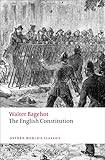
The English Constitution
Walter Bagehot
Use this when you want the longer institutional or historical backdrop.
The classic account of how Britain's unwritten constitution actually works.
The Big Shift
John Ibbitson & Darrell Bricker
A strong first book if you want the clearest next step from this page.
How immigration and urbanization are remaking Canadian politics.

A Short History of Australia
Geoffrey Blainey
A strong first book if you want the clearest next step from this page.
The essential introduction to Australia's political and social history.
As an Amazon Associate, PoliticaHub earns from qualifying purchases at no extra cost to you.
Connections
Topics
Housing
Government policies affecting housing supply, affordability, rental markets, and homelessness. Increasingly central to politics in countries facing affordability crises.
Immigration
Policy governing the movement of people across borders, including asylum, work permits, citizenship pathways, and border enforcement. One of the most polarizing issues in democracies worldwide.
LGBTQ+ Rights
Legal protections and recognition for sexual orientation and gender identity, including marriage equality, anti-discrimination laws, and adoption rights. A major social policy divide between and within countries.
Welfare State
Government provision of social safety nets including unemployment insurance, pensions, disability support, and poverty reduction programs. Defines the social contract between state and citizen.
Country Feedback
Quick signal only. No account needed.
Trust & Coverage
- Page Type
- Country
- Last Updated
- April 15, 2026
- Sources
- Graph-backed
- Data Coverage
- Comprehensive(85/100)
Country data is assembled from structured entity records, election results, and office timelines.
Das könnte Sie auch interessieren
GroenLinks-PvdA
GroenLinks-PvdA is the red-green electoral alliance formed by Dutch Labour and GreenLeft for the 2023 election. It reflects a strategic recognition that the Dutch center-left had become too fragmented to compete effectively as separate brands against an increasingly consolidated right and a highly splintered party system. Under Frans Timmermans the alliance tried to fuse climate politics, social-democratic redistribution, Europeanism, and a more morally explicit defense of liberal democracy against Wilders-style politics.
Party for Freedom
The PVV is Geert Wilders' personal political vehicle and one of the most unusual major parties in Europe because it is effectively organized around a single member: Wilders himself. It was created after Wilders broke with the VVD and built its identity around anti-Islam politics, immigration restriction, harsh law-and-order messaging, and hostility toward EU integration. For years it shaped Dutch politics mainly from outside power, but its 2023 victory forced the Dutch establishment to decide whether Wilders would remain a permanent outsider or become part of government.
People's Party for Freedom and Democracy
The VVD is the Netherlands' main liberal-conservative governing party and the party that dominated the Mark Rutte era. It combines pro-business economics, Atlanticism, support for the European Union from a pragmatic rather than idealistic angle, and a long tradition of managerial coalition politics. Its importance comes not only from ideology but from its role as the central brokerage party of Dutch politics: flexible enough to work with centrists and Christian democrats, but increasingly pressured on the right by Wilders and newer populist challengers.
House of Representatives of the Netherlands
Lower house of the Dutch parliament, elected by nationwide proportional representation.
Housing
Government policies affecting housing supply, affordability, rental markets, and homelessness. Increasingly central to politics in countries facing affordability crises.
Immigration
Policy governing the movement of people across borders, including asylum, work permits, citizenship pathways, and border enforcement. One of the most polarizing issues in democracies worldwide.