
PoliticaHub Reference Sheet
Al-Meethaq
Party · Printed May 22, 2026 · politicahub.com/party/al-meethaq-bh
political grouping in Bahrain
Key Facts
| founded year | 2002 |
| overview | Al-Meethaq is one of the main liberal political societies that emerged in Bahrain after the National Action Charter period. It is notable less for mass electoral strength than for the political space it tried to occupy: pro-reform but pro-establishment, socially more liberal than Bahrain's Islamist forces, and supportive of gradual constitutional evolution under the monarchy rather than confrontational regime change. |
Frequently Asked Questions
- Q: When was Al-Meethaq founded?
- A: Al-Meethaq was founded in 2002, about 24 years ago.
- Q: Who is associated with Al-Meethaq?
- A: Politicians connected to Al-Meethaq on this site include Ahmad Juma.
- Q: Where does Al-Meethaq operate?
- A: Al-Meethaq operates in Bahrain.
Source: politicahub.com/party/al-meethaq-bh
Al-Meethaq Operates in Bahrain: Pro-Monarchy Political Society
Al-Meethaq isn't an opposition party — it's a loyalist vehicle. Bahrain bans formal political parties, so politics runs through licensed "political societies" instead, and Al-Meethaq is the pro-monarchy liberal one. It exists to signal that reform has a royalist home, so voters don't have to choose between the regime and the (mostly Shia) opposition.
ByNorthUpdated
Al-Meethaq isn't an opposition party — it's a loyalist vehicle. Bahrain bans formal political parties, so politics runs through licensed "political societies" instead, and Al-Meethaq is the pro-monarchy liberal one. It exists to signal that reform has a royalist home, so voters don't have to choose between the regime and the (mostly Shia) opposition.
Al-Meethaq operates in Bahrain. It's a pro-government political society — not a formal party, because Bahrain bans parties outright — founded in 2002 and named after the National Action Charter, the 2001 royal document that launched the country's controlled political opening. Its full name is the National Action Charter Society (Tajammu al-Meethaq al-Watani). Politically it sits on the loyalist, liberal side of the Bahraini spectrum: aligned with the Al Khalifa monarchy, broadly secular, and positioned against the Shia opposition societies (most prominently Al-Wefaq, dissolved in 2016).
Three things to know. (1) Bahrain has "political societies", not parties — this is the legal category Al-Meethaq sits in, alongside its ideological opposites like the (now-banned) Al-Wefaq. (2) "Liberal" in this context means pro-reform and secular within a monarchist framework, not opposition to the ruling family. (3) Al-Meethaq's electoral footprint is small; its political function is symbolic — giving the regime a reformist-looking partner that isn't the Shia opposition.
- BahrainSee Bahrain's political structure, monarchy, and where political societies fit.
- Bahrain Political SocietiesThe full field of Bahrain's licensed societies — loyalist, Shia opposition, and secular.
- Bahrain GovernmentHow executive authority sits with the Al Khalifa monarchy.
- Bahrain Political SystemThe constitutional-monarchy framework built on the 2001 National Action Charter.
- India 2029 Lok Sabha Election: Modi's 4th Term Test & What's At StakeThe 2029 Lok Sabha election decides whether the BJP's post-2014 dominance turns into a true four-term run or finally cracks. After 2024 forced Modi back into…
- China 21st Party Congress 2027: Will Xi Step Down — Or Take A 4th Term?The 21st Party Congress is the first real test of whether Xi Jinping rules for life or starts a managed succession. After scrapping the two-term limit in 201…
- Everybody's Hungary People's Party: Márki-Zay's Anti-Orbán BetThe Hungarian opposition has spent fifteen years losing rural, religious voters to Orbán because its urban-liberal wing looks culturally alien to them. Every…
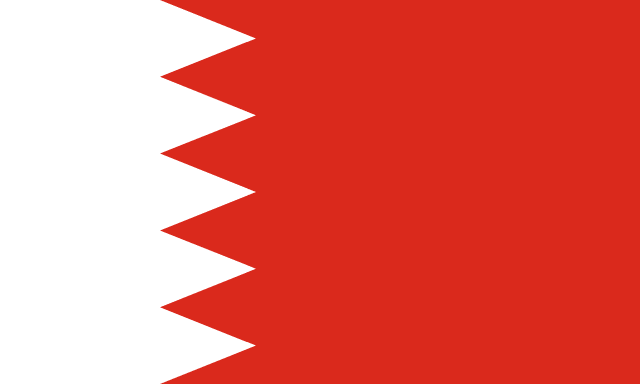
BahrainFounded 2002
Häufige Fragen
- Which country does Al-Meethaq operate in?
- Al-Meethaq operates in Bahrain. It is one of the kingdom's licensed political societies (Bahrain does not legally permit formal political parties).
- Is Al-Meethaq a political party?
- No — because Bahrain does not allow political parties. Al-Meethaq is a "political society" (jam'iyya siyasiyya), the legal form through which organised politics operates in the kingdom. Functionally it plays the role a party would in another system.
- What does Al-Meethaq stand for?
- It's a pro-monarchy, liberal-leaning society aligned with the ruling Al Khalifa family. It supports the framework of the 2001 National Action Charter (the king's reform document, which gives the society its name) and positions itself as a secular, reformist alternative to Bahrain's Islamist societies on both Sunni and Shia sides.
- When was Al-Meethaq founded?
- Al-Meethaq (the National Action Charter Society) was founded in 2002, immediately after the 2001 National Action Charter referendum that launched Bahrain's shift from an emirate to a constitutional monarchy.
- Is Al-Meethaq opposition or pro-government?
- Pro-government. It supports the Al Khalifa monarchy and the constitutional framework introduced by King Hamad. Bahrain's actual opposition — historically the Shia-led Al-Wefaq and secular Wa'ad — has been progressively dissolved or constrained since the 2011 protests.
- Who is associated with Al-Meethaq?
- Politicians connected to Al-Meethaq on this site include Ahmad Juma.
Overview
Al-Meethaq is one of the main liberal political societies that emerged in Bahrain after the National Action Charter period. It is notable less for mass electoral strength than for the political space it tried to occupy: pro-reform but pro-establishment, socially more liberal than Bahrain's Islamist forces, and supportive of gradual constitutional evolution under the monarchy rather than confrontational regime change.
Related people, parties, or institutions mentioned in the page.
Why It Was Founded
The society was founded in 2002 to give Bahrain's liberal and business-oriented current a more organized voice after the political opening associated with the National Action Charter. Its founders wanted a vehicle that could defend personal freedoms, constitutional gradualism, and civic participation without joining the more confrontational opposition line taken by Islamist and protest movements.
Party History
Al-Meethaq was founded by figures from prominent Sunni and Shia business families during Bahrain's early-2000s reform period. It struggled electorally, but it became institutionally relevant because members and allies were appointed into the Consultative Council and because the society represented a recognizable liberal camp in a system otherwise dominated by Islamist and palace-centered actors. During the post-2011 crisis period it aligned with a gradualist and establishment-friendly reading of reform rather than revolutionary opposition politics.
Core Beliefs
The group is usually associated with liberalism, personal freedoms, gradual constitutional reform, and support for political participation within the monarchy's framework. That makes it distinct from both Sunni and Shia Islamist societies, which historically commanded much larger grassroots networks.
Policy Examples
Al-Meethaq has often been linked to campaigns and forums defending personal freedoms, civic moderation, and a more liberal social outlook in Bahrain's public life. Its practical significance lies in how it frames reform: not through regime overthrow, but through managed institutional change, elite negotiation, and the strengthening of a liberal social current inside a tightly controlled political order.
Two books worth reading
 View on AmazonStart Here
What Is Populism?
Jan-Werner Müller
A concise, rigorous diagnosis of populism as a political logic — not just a style.
View on Amazon Listen on AudibleStart Here
The Communist Manifesto
Karl Marx & Friedrich Engels
The text that launched a global political movement and reshaped the 20th century.
Listen on Audible
As an Amazon Associate, PoliticaHub earns from qualifying purchases (including Audible) at no extra cost to you.
Party Feedback
Trust & Coverage
- Page Type
- Party
- Last Updated
- April 15, 2026
- Sources
- 2 linked
This page is generated from structured entity, relationship, and metadata records.
Coverage is still growing country by country, so some timelines and relationships may be incomplete.