
PoliticaHub Reference Sheet
Everybody's Hungary People's Party
Party · Printed May 22, 2026 · politicahub.com/party/everybodys-hungary-peoples-party-hu
Hungarian political movement
Key Facts
| founded year | 2024 |
| overview | Everybody's Hungary People's Party is best understood as an opposition movement trying to turn anti-corruption and anti-Fidesz civic energy into a more durable party vehicle. Its identity is less that of a classic mass ideological party and more that of a coalition-making platform around clean government, institutional repair, and the idea that Hungary's opposition must reach conservative as well as liberal voters if it wants to break Viktor Orban's dominance. |
Frequently Asked Questions
- Q: When was Everybody's Hungary People's Party founded?
- A: Everybody's Hungary People's Party was founded in 2024, about 2 years ago.
- Q: Who is associated with Everybody's Hungary People's Party?
- A: Politicians connected to Everybody's Hungary People's Party on this site include Peter Marki-Zay.
- Q: Where does Everybody's Hungary People's Party operate?
- A: Everybody's Hungary People's Party operates in Hungary.
Source: politicahub.com/party/everybodys-hungary-peoples-party-hu
Everybody's Hungary People's Party: Márki-Zay's Anti-Orbán Bet
The Hungarian opposition has spent fifteen years losing rural, religious voters to Orbán because its urban-liberal wing looks culturally alien to them. Everybody's Hungary People's Party is the counter-bet: a Christian-democrat, socially conservative anti-Fidesz vehicle, built around Péter Márki-Zay, that tries to beat Orbán on his own cultural terrain rather than from the opposite pole he's defined as the enemy.
ByNorthUpdated
The Hungarian opposition has spent fifteen years losing rural, religious voters to Orbán because its urban-liberal wing looks culturally alien to them. Everybody's Hungary People's Party is the counter-bet: a Christian-democrat, socially conservative anti-Fidesz vehicle, built around Péter Márki-Zay, that tries to beat Orbán on his own cultural terrain rather than from the opposite pole he's defined as the enemy.
Everybody's Hungary People's Party (Mindenki Magyarországa Néppárt, MMN) is the opposition party built around Péter Márki-Zay, the conservative former mayor of Hódmezővásárhely who led the united anti-Orbán coalition's losing 2022 prime-ministerial bid. What's distinctive about it in Hungary's party field is its ideology: explicitly Christian-democratic, socially conservative, anti-corruption, and pro-European. Most of Hungary's anti-Fidesz opposition sits on the urban-liberal left; MMN is the deliberate exception — an attempt to contest Fidesz for the same voters (religious, provincial, culturally conservative) rather than concede them by default.
The strategic bet is that Fidesz wins not because rural, religious Hungarians prefer its policies in detail, but because its opposition looks culturally foreign to them. Márki-Zay's answer is an opposition party that shares Fidesz's cultural frame (faith, family, provincial identity) while rejecting its corruption, EU hostility, and institutional capture. Two questions decide the party's future: whether it can grow past Márki-Zay's personal brand into a durable organization, and whether the broader opposition — still dominated by left-liberals — will tolerate a conservative leading the anti-Orbán coalition next cycle.
- Péter Márki-ZayThe conservative politician at the centre of the party's identity and strategy.
- HungaryHungary's political system, Fidesz dominance, and the opposition landscape.
- Hungary PartiesThe full Hungarian party field — ruling, systemic opposition, and newer vehicles.
- Hungary ElectionsTrack Hungary's parliamentary election sequence and opposition coalition attempts.
- India 2029 Lok Sabha Election: Modi's 4th Term Test & What's At StakeThe 2029 Lok Sabha election decides whether the BJP's post-2014 dominance turns into a true four-term run or finally cracks. After 2024 forced Modi back into…
- China 21st Party Congress 2027: Will Xi Step Down — Or Take A 4th Term?The 21st Party Congress is the first real test of whether Xi Jinping rules for life or starts a managed succession. After scrapping the two-term limit in 201…
- Al-Meethaq Operates in Bahrain: Pro-Monarchy Political SocietyAl-Meethaq isn't an opposition party — it's a loyalist vehicle. Bahrain bans formal political parties, so politics runs through licensed "political societies…
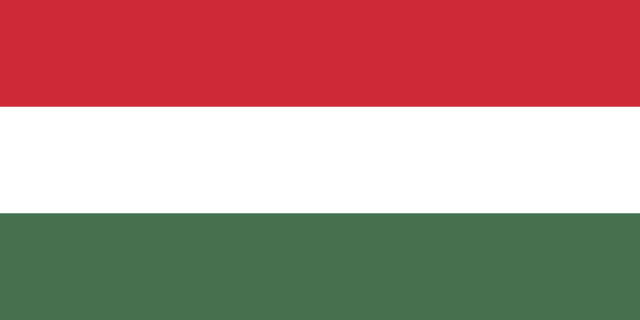
HungaryFounded 2024
Häufige Fragen
- What is Everybody's Hungary People's Party?
- It's a Hungarian opposition party built around Péter Márki-Zay, the conservative politician who led the 2022 united anti-Orbán coalition. Its distinctive position in the party field is being explicitly Christian-democratic and socially conservative — the only serious anti-Fidesz party not positioned on the urban-liberal left.
- Who is Péter Márki-Zay and why does he matter?
- Márki-Zay is the former mayor of Hódmezővásárhely (a provincial town long held by Fidesz before he won it in 2018) and the 2022 opposition's joint PM candidate. He's a devout Catholic, father of seven, and economically liberal conservative — the rare anti-Orbán figure who can plausibly speak to Fidesz's base rather than only Budapest liberals.
- How is MMN different from other Hungarian opposition parties?
- Most anti-Fidesz parties (DK, Momentum, Párbeszéd, MSZP) sit somewhere between centre-left and liberal. MMN is explicitly conservative-Christian-democratic. Its theory of winning is that the opposition needs to compete with Fidesz on cultural ground — rural, religious, family-values voters — not just mobilize urban liberals, who are already mobilized and outnumbered.
- What role did MMN play in the 2022 election?
- The 2022 contest predates MMN's formal founding, but Márki-Zay led the broader united opposition that year — a six-party coalition that lost decisively despite pre-election polls suggesting competitiveness. The party emerged after that defeat as an attempt to keep the conservative strand of the opposition organized rather than dissolving it back into the liberal-dominated coalition.
- Is Everybody's Hungary People's Party right-wing?
- Socially yes — it's Christian-democratic and conservative on family and religion. Politically no, if "right-wing" is used to mean Fidesz-adjacent: MMN is firmly anti-Orbán, pro-EU, pro-rule-of-law, and anti-corruption. It's best understood as occupying the Christian-democrat space that Fidesz rhetorically claims but, in MMN's view, has abandoned in practice.
- When was Everybody's Hungary People's Party founded?
- Everybody's Hungary People's Party was founded in 2024, about 2 years ago.
Overview
Everybody's Hungary People's Party is best understood as an opposition movement trying to turn anti-corruption and anti-Fidesz civic energy into a more durable party vehicle. Its identity is less that of a classic mass ideological party and more that of a coalition-making platform around clean government, institutional repair, and the idea that Hungary's opposition must reach conservative as well as liberal voters if it wants to break Viktor Orban's dominance.
Related people, parties, or institutions mentioned in the page.

Why It Was Founded
The movement's purpose is to provide an organizational home for the strand of Hungarian opposition politics associated with Peter Marki-Zay: anti-corruption, civic-minded, pro-European, and explicitly interested in building bridges across the traditional left-right divide. It was designed for a political system in which fragmented opposition parties have repeatedly struggled to turn public dissatisfaction into coherent power.
Party History
The party grows out of the political current that made Marki-Zay nationally prominent: his upset mayoral win in Hodmezovasarhely, his later role as the joint opposition prime-ministerial candidate in 2022, and the continuing search for a broad-based challenger to Fidesz. Its significance lies less in institutional age than in what it represents inside Hungary's opposition: an effort to build a conservative-friendly, anti-regime alternative that does not fit neatly into older party categories.
Core Beliefs
The movement's main themes are anti-corruption politics, stronger local government, rule-of-law repair, pro-European positioning, and the argument that democratic opposition in Hungary has to reach beyond the traditional urban liberal base. That makes it more coalition-oriented and movement-like than many older parties with clearer fixed ideological traditions.
Policy Examples
Its policy language typically centers on institutional fairness, democratic competition, transparent procurement, limits on clientelism, and support for Western alliances and European integration. The movement's strategic message is often as important as its detailed policy menu: it argues that opposition success requires credible candidates who can speak to religious, provincial, and center-right voters as well as the metropolitan opposition electorate.
Two books worth reading
 View on AmazonStart Here
The Party
Richard McGregor
The secret world of China's Communist rulers and how the Party controls everything.
View on Amazon Listen on AudibleDeeper History
Political Parties
Giovanni Sartori
The classic framework for understanding how party systems form and compete.
Listen on Audible
As an Amazon Associate, PoliticaHub earns from qualifying purchases (including Audible) at no extra cost to you.
Party Feedback
Trust & Coverage
- Page Type
- Party
- Last Updated
- April 15, 2026
- Sources
- 2 linked
This page is generated from structured entity, relationship, and metadata records.
Coverage is still growing country by country, so some timelines and relationships may be incomplete.