
France Government & Political System
France is the republic of strong presidents, a strong state, weak party loyalties, and recurring political eruptions. It is centralised enough to look controlled from Paris and conflict-ridden enough to remind you that French politics is never really settled.
A State Built After Repeated Breakdowns
France carries more regime memory than almost any other large democracy. Revolution, empire, monarchy, republic, collapse, occupation, liberation, and constitutional redesign are not just items in a timeline here; they are part of the political imagination. That is why debates about authority, legitimacy, and the role of the state often feel unusually loaded. French politics rarely treats institutions as neutral background.
The current system was created to end a specific kind of breakdown. The Fourth Republic was parliamentary, fragmented, and chronically unstable. The Fifth Republic, founded in 1958 during the Algerian crisis, was designed to give the executive more continuity and more room to act. Modern French politics still lives inside that bargain: less parliamentary chaos in exchange for a presidency with unusually heavy political weight.
The Presidency Is The Pressure Point
France is not a pure presidential system, but the presidency is the emotional and strategic center of political life. The president sets the national direction, shapes foreign and defense policy, and can dominate domestic politics when backed by a working majority in the National Assembly. In those moments the system can look almost hyper-presidential by European standards.
But the dual executive never disappears entirely. The prime minister still matters, parliament can still obstruct, and when the Assembly turns hostile the system starts to reveal its other face. France then becomes less a stage for presidential command and more a test of whether the Fifth Republic can absorb deadlock without sliding back into the instability it was built to prevent.
The Street, The Assembly, And The Collapse Of Old Party Habits
French politics no longer runs through the old left-right party machinery in the way it once did. The Socialist Party and the traditional Gaullist right both weakened sharply, a centrist presidential movement disrupted the middle of the system, and the far right became too large to dismiss as just a protest current. The result is a more fragmented electoral field with weaker party loyalties and more volatile alliances.
France also keeps reminding observers that elections are not the only arena that matters. Trade unions, protest movements, students, farmers, and public-sector workers can all pull politics into the street. Pension reform, policing, secularism, immigration, and the cost of living do not stay confined to parliamentary procedure for long. The state may be centralized, but public conflict is not neatly contained.
What To Watch
Watch whether the Fifth Republic can still do what it was built to do: produce governability when the party system is fractured and the electorate is angry. A fragmented Assembly, a weakened center, and a large far-right vote all put pressure on a system that works best when one political bloc can clearly command the institutions.
Also watch the relationship between state authority and social legitimacy. France can look powerful on paper and brittle in practice. That tension is one reason the country remains such a revealing case. It shows how a strong executive state can still struggle to convert legal authority into political consent.
Political Architecture
How فرنسا Is Structured
The executive, legislature, elections, parties, and institutions that make up فرنسا's political system — and how they connect.
Dig Deeper
Power Profile
Executive power concentrated in the elected president
Direct election of head of state and legislature
Separated across executive, legislative, and judicial branches
Shapes global trade, security, and diplomatic outcomes beyond national borders
Derived from system type and role classification
Position in System
فرنسا operates under a presidential system with clear separation of powers. The president holds concentrated executive authority while the legislature and judiciary serve as independent branches, creating a system of checks and balances. The system operates through 3 tracked political offices and 2 institutions, which collectively define how authority is exercised, checked, and transferred.
هل تعلم؟
- 353 political parties compete for just 3 tracked elected offices.
Election Tracker
All electionsPolitical Parties
All 353 partiesA Cuncolta Naziunalista
political party in France, Corsica
A here ia Porinetia
political party in French Polynesia
Abertzaleen Batasuna
political party in Basque Country
Action Balance and Transparence
Political party in Saint Barthélemy
Adsav
political party
African Democratic Rally
political party in French West Africa and French Equatorial Africa
Related Scenarios
france
What happens if the French President dissolves the National Assembly?
→The French president has the constitutional power to dissolve the National Assembly and trigger new legislative elections, a tool that can reshape the political landscape or backfire dramatically.
france
What happens if the President of France resigns?
→If the French president resigns, the presidency becomes vacant and the constitutional succession rules in Article 7 are triggered until a new election is held.
united states
What happens if the U.S. invokes NATO Article 5?
→Article 5 is NATO's collective defence clause — an attack on one member is considered an attack on all. It has been invoked only once, by the United States after the September 11, 2001 attacks.
الأسئلة الشائعة
- What type of government does France have?
- France is a semi-presidential republic. The president is directly elected and has strong powers over foreign policy, defense, and appointments. The prime minister manages domestic policy and must maintain confidence in the National Assembly.
- Who is the current president of France?
- Emmanuel Macron has been President of France since May 2017. He was re-elected in April 2022, defeating Marine Le Pen in the second round.
- What is cohabitation in French politics?
- Cohabitation occurs when the president and prime minister come from opposing political camps. It last happened from 1997 to 2002 and forces power-sharing between the two executives.
- What are the main political parties in France?
- Key parties include Renaissance (Macron's centrist party), Rassemblement National (far-right, Marine Le Pen), the Socialist Party (centre-left), La France Insoumise (left-populist, Melenchon), and Les Republicains (centre-right Gaullist).
- How does the French electoral system work?
- France uses a two-round system for both presidential and legislative elections. If no candidate wins an absolute majority in the first round, the top candidates proceed to a second-round runoff.
- What type of government does فرنسا have?
- فرنسا is a Unitary semi-presidential republic. This system defines how executive, legislative, and judicial power is organized and exercised in the country. In a presidential system, the president serves as both head of state and head of government with direct executive authority.
ByNorth
Verdict: France is a semi-presidential republic — the president dominates foreign policy and defense, while the prime minister manages domestic governance.
France is a semi-presidential republic under the Fifth Republic constitution (1958). The president is directly elected for a five-year term and holds significant executive power, especially in foreign affairs and defense. The prime minister, appointed by the president, leads day-to-day government and must maintain the confidence of the National Assembly. Emmanuel Macron has been president since 2017.
This page covers France's semi-presidential system, the cohabitation dynamic, the role of the National Assembly, key parties, and recent political developments.
France is the EU's only nuclear-armed state and one of the few countries with full-spectrum expeditionary military capability.
France
- القوة العسكرية
- Major nuclear power
- ميزانية الدفاع
- ~$65 billion
- القوات العاملة
- ~304,000
- النفوذ العالمي
- Very High
الخلاصة. France keeps an independent nuclear deterrent, expeditionary capability, overseas bases, and a serious defense industry — Paris wants the option to act, not merely be consulted. Mass and ammunition depth are the real limits.
Defense spending uses SIPRI-backed 2024 estimates; personnel uses IISS-backed counts.
- Emmanuel MacronSee the profile of France's president and his political trajectory.
- Rassemblement NationalExplore France's leading far-right party and its growing electoral strength.
- French ElectionsTrack French presidential and legislative elections over time.
- France Political SystemSee how the presidency, prime minister, and National Assembly interact.
- French President vs German ChancellorA comparison of Europe's two most powerful executives who operate under fundamentally different constitutional designs: one semi-presidential, one fully parliamentary.
- Germany vs France: Political System and Executive Power ComparedGermany and France are both central European powers, but they organize executive authority very differently: Germany through parliamentary coalition rule and France through a semi-presidential system centered on the presidency.
Three books worth reading
 View on AmazonStart Here
France: A Modern History from the Revolution to the War with Terror
Jonathan Fenby
Sweeping narrative of France's turbulent political journey from 1789 to the present.
View on Amazon Listen on AudibleBiography
The Chancellor: The Remarkable Odyssey of Angela Merkel
Kati Marton
How an obscure East German physicist became the most powerful woman in the world — and the leader the West needed.
Listen on Audible View on AmazonDeeper History
Iron Curtain
Anne Applebaum
How Soviet control was imposed on Eastern Europe after World War II.
View on Amazon
As an Amazon Associate, PoliticaHub earns from qualifying purchases (including Audible) at no extra cost to you.
Connections
Topics
Climate Policy
Government action to address climate change through emissions reduction, energy transition, carbon pricing, and international agreements. Intersects with energy, trade, and industrial policy.
Defense and Military
National defense spending, military alliances, arms procurement, and the use of armed forces abroad. Shapes a country's geopolitical posture and domestic budget priorities.
Healthcare
Government role in providing, regulating, and funding medical services. Ranges from single-payer national systems to private insurance markets. A dominant issue in electoral politics across developed and developing nations.
Immigration
Policy governing the movement of people across borders, including asylum, work permits, citizenship pathways, and border enforcement. One of the most polarizing issues in democracies worldwide.
Nuclear Weapons
Policy on nuclear arsenals, nonproliferation treaties, deterrence strategy, and disarmament. Nine states possess nuclear weapons, shaping global security architecture.
Pension Reform
Restructuring retirement benefit systems to address aging populations, fiscal sustainability, and intergenerational equity. Politically explosive in many countries.
Taxation
How governments raise revenue through income, corporate, consumption, and wealth taxes. Tax policy reflects fundamental choices about redistribution, economic incentives, and the size of government.
Welfare State
Government provision of social safety nets including unemployment insurance, pensions, disability support, and poverty reduction programs. Defines the social contract between state and citizen.
Institutions
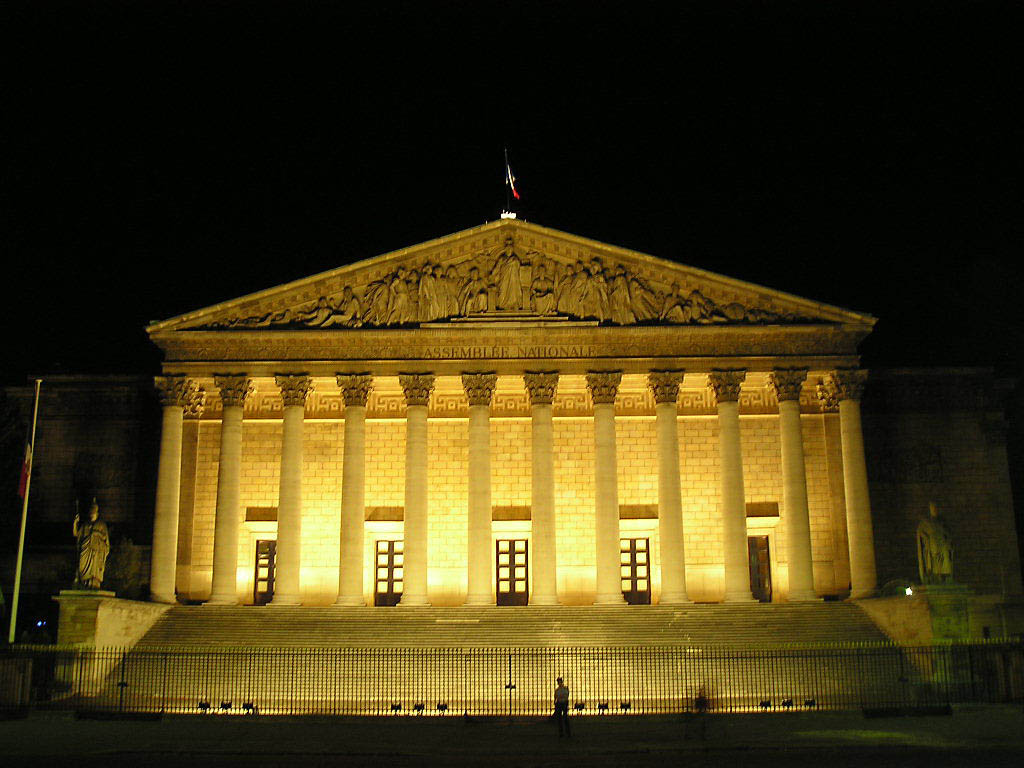
Offices
President of France
Head of state of France. Elected by direct popular vote to five-year terms. Appoints the Prime Minister.
President of the French Republic
Head of state office of France.
Prime Minister of France
Head of government office of France.
Country Feedback
Trust & Coverage
- Page Type
- Country
- Last Updated
- April 15, 2026
- Sources
- Graph-backed
Country data is assembled from structured entity records, election results, and office timelines.
قد ترغب أيضاً في الاستكشاف
A Cuncolta Naziunalista
political party in France, Corsica
A here ia Porinetia
political party in French Polynesia
Abertzaleen Batasuna
political party in Basque Country
Action Balance and Transparence
Political party in Saint Barthélemy
Adsav
political party
African Democratic Rally
political party in French West Africa and French Equatorial Africa