
Russia Political System & Government Explained
Russia is a federal semi-presidential republic on paper, but in practice it operates as a centralized authoritarian system dominated by President Vladimir Putin. United Russia controls the State Duma with a supermajority, opposition activity is severely constrained, and the state exerts strong influence over media and elections.
What stands out
- 169 parties compete for just 3 tracked governing offices.
- Most active policy lanes in the graph: Corruption, Defense and Military, and Election Integrity.
The Constitution And The Real System
Russia is one of the clearest examples in the world of the gap between formal institutions and actual rule. On paper it has elections, a constitution, federalism, courts, parties, and a legislature. In practice those institutions no longer operate as independent centers of authority. They are arranged around the presidency and expected to ratify, administer, or justify decisions made closer to the Kremlin core.
That was not inevitable from the start. The Russian Federation began the 1990s with real political conflict, noisy media, competitive elections, and powerful regional actors. But the constitution born out of the 1993 crisis already concentrated huge power in the presidency. Vladimir Putin did not have to invent an overpowered executive from scratch. He inherited one, then used state resources, coercion, patronage, and fear to make the rest of the system answer to it.
How The Kremlin Keeps Control
The so-called vertical of power is not just a slogan. It is a system for keeping governors, security agencies, prosecutors, state companies, and major media inside one chain of political dependence. Regional leaders know their room for maneuver is narrow. Parliament knows it is there to process decisions, not to generate them. Courts know the boundaries of politically acceptable judgments. Business elites know wealth and legal safety depend on loyalty.
United Russia matters inside this arrangement, but less as a governing party than as an instrument of regime management. It helps structure elections, distribute access, and signal who belongs in the official political space. The deeper architecture sits elsewhere: in the presidential administration, the Security Council, the security services, and the personal networks around the president. That is why Russia should be read less as a party state than as a personalized security state with electoral packaging.
Why Elections Still Happen
The regime keeps elections because elections still do useful work. They signal strength, sort elites, reward loyalty, and let the state stage-manage public legitimacy. Opposition is not always banned outright; it is filtered, fragmented, intimidated, and pushed into channels the Kremlin can supervise. The system does not need everyone to believe the process is fair. It needs enough public passivity and enough administrative control to keep outcomes predictable.
That is also why multiple parties remain in the Duma. A controlled opposition is more useful than a blank ballot. It gives frustrated voters somewhere to go without threatening the center of the system. The constitutional amendments adopted in 2020 fit the same pattern. They did not create competitive politics on new terms; they updated the legal shell so personalized rule could continue longer and reach deeper into the judiciary and the broader state.
What The War Changed
The full-scale invasion of Ukraine hardened the regime and narrowed its options. Wartime mobilization strengthened the security apparatus, expanded censorship, and pushed the economy further toward military priorities and sanctions management. It also tied regime legitimacy even more closely to a story of national siege, which makes strategic retreat politically dangerous for the leadership.
At the same time, the war exposed how brittle a personalized system can be. The Wagner mutiny showed that the chain of command was not as seamless as official imagery suggested. The succession question remains unresolved because the regime was built to prevent autonomous rival centers from emerging. That means Russia now combines high coercive capacity with deep long-term uncertainty about what happens when the man at the top can no longer hold the network together.
Political Architecture
How Russia Is Structured
The executive, legislature, elections, parties, and institutions that make up Russia's political system — and how they connect.
Dig Deeper
Election Tracker
All electionsRussia 2024 Presidential Election
Russian presidential election held March 2024. Vladimir Putin won a fifth term with an officially reported 87% of the vote amid international criticism of the process. Genuine opposition candidates were barred from running.
Russia 2021 State Duma Election
Russian State Duma election held September 2021. United Russia retained its supermajority amid allegations of widespread fraud and the imprisonment of opposition leader Alexei Navalny.
Russia 2018 Presidential Election
Russian presidential election held March 2018. Putin won re-election with 77% of the vote. His strongest challenger, Navalny, was barred from running.
Political Parties
All 169 parties5th of December Party
political party in Russia
A Just Russia
Centre-left party in Russia created in 2006 to absorb left-leaning voters. Functions as a systemic opposition party within the managed political landscape.
Adat People's Movement
political movement in Chechnya
Agrarian Party of Russia
political party in Russia
Agrarian Socialist League
Political party in Russia.
All-Russian Sociopolitical Movement of Women of Russia
Russian feminist political group
Preguntas frecuentes
- What type of government does Russia have?
- Russia is constitutionally a federal semi-presidential republic, but in practice power is heavily centralized in the presidency. Competitive opposition is severely limited.
- Who is the current president of Russia?
- Vladimir Putin has been president since 2012 (previously 2000-2008). He won a fifth presidential term in March 2024 with over 87% of the vote in an election widely criticized as neither free nor fair.
- Is Russia a democracy?
- Russia holds elections but is classified as an authoritarian regime by most democracy indices. Opposition candidates face legal barriers, independent media is suppressed, and electoral outcomes are managed.
- What is the State Duma?
- The State Duma is the lower house of Russia's Federal Assembly (parliament), with 450 seats. It is dominated by United Russia, and the remaining seats are held by parties that generally support the Kremlin on key issues.
- What are the main political parties in Russia?
- United Russia (pro-Putin, dominant) controls the Duma. Other parliamentary parties include the Communist Party (CPRF), LDPR (nationalist), and A Just Russia (centre-left). These function as systemic opposition within a managed political landscape.
- What are the main political offices in Russia?
- Chairman of the State Duma, President of Russia, Prime Minister of Russia.
ByNorth
Verdict: Russia is formally a semi-presidential republic, but in practice power is heavily concentrated in the presidency under Vladimir Putin.
Russia is a federal semi-presidential republic on paper, but in practice it operates as a centralized authoritarian system dominated by President Vladimir Putin. United Russia controls the State Duma with a supermajority, opposition activity is severely constrained, and the state exerts strong influence over media and elections.
This page explains how Russia's political system works in practice versus its constitutional design, covering executive dominance, managed parties, and the erosion of competitive politics.
Russia possesses the world's largest nuclear arsenal and a large conventional military, though the war in Ukraine has significantly strained its capabilities.
Russia
- Fuerza militar
- Major nuclear, hollowed out
- Presupuesto de defensa
- ~$109 billion
- Personal activo
- ~1,150,000
- Influencia global
- High
Idea clave. The world's largest nuclear arsenal is intact, but the bulk of combat-ready conventional forces are tied down in Ukraine. Russia has effectively stopped honoring CSTO security commitments since 2022 — most visibly during the Armenia-Azerbaijan crisis — and combat in Ukraine has exposed corruption, logistics failures, and reliance on attrition.
Defense spending uses SIPRI-backed 2024 estimates; personnel uses IISS-backed counts.
- Vladimir PutinSee the profile of Russia's president and dominant political figure.
- United RussiaExplore the ruling party closely associated with Putin's power structure.
- Russia Political SystemSee how the presidency, State Duma, and Federation Council relate.
- Russian PartiesBrowse Russia's managed multi-party landscape and opposition dynamics.
Three books worth reading
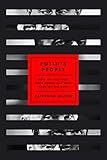 View on AmazonStart Here
Putin's People
Catherine Belton
How the KGB recaptured Russia and then extended its reach into the West.
View on Amazon Listen on AudibleBiography
The New Tsar
Steven Lee Myers
The definitive biography of Vladimir Putin's rise and rule.
Listen on Audible View on AmazonStart Here
Blackout: How Ukraine Fights Back
Oleksiy Sorokin & Illia Ponomarenko
Inside Ukraine's military and political resistance against Russia's full-scale invasion.
View on Amazon
As an Amazon Associate, PoliticaHub earns from qualifying purchases (including Audible) at no extra cost to you.
Connections
Offices
Chairman of the State Duma
Presiding officer of the State Duma, the lower house of the Russian Federal Assembly. Manages legislative proceedings and parliamentary agenda.
President of Russia
Head of state of the Russian Federation. Directly elected for six-year terms (previously four). Commands the armed forces, directs foreign policy, and appoints the prime minister with Duma approval.
Prime Minister of Russia
Head of government of Russia. Leads the cabinet and oversees domestic economic policy. Appointed by the president with State Duma consent.
Topics
Corruption
The abuse of public office for private gain. Anti-corruption measures include transparency laws, independent judiciaries, press freedom, and whistleblower protections. A central governance challenge worldwide.
Defense and Military
National defense spending, military alliances, arms procurement, and the use of armed forces abroad. Shapes a country's geopolitical posture and domestic budget priorities.
Election Integrity
Ensuring free, fair, and transparent elections through voter registration systems, independent electoral commissions, and protections against fraud and manipulation.
Nuclear Weapons
Policy on nuclear arsenals, nonproliferation treaties, deterrence strategy, and disarmament. Nine states possess nuclear weapons, shaping global security architecture.
Press Freedom
The degree to which media can operate independently from government interference. Includes legal protections for journalists, media ownership rules, and state censorship policies.
Sanctions
Economic and diplomatic penalties imposed on states, organizations, or individuals to achieve foreign policy objectives. A primary tool of international statecraft.
Institutions
Federal Assembly of the Russian Federation
legislature of the Russian Federation
Federation Council
Upper house of the Federal Assembly of Russia. Composed of two representatives from each federal subject. Approves presidential decrees on martial law and the use of armed forces abroad.
State Duma
Lower house of the Federal Assembly of Russia. 450 members elected for five-year terms by a mixed system of proportional representation and single-member districts.
Country Feedback
Trust & Coverage
- Page Type
- Country
- Last Updated
- April 15, 2026
- Sources
- 2 linked
Country data is assembled from structured entity records, election results, and office timelines.
También puedes explorar
5th of December Party
political party in Russia
A Just Russia
Centre-left party in Russia created in 2006 to absorb left-leaning voters. Functions as a systemic opposition party within the managed political landscape.
Adat People's Movement
political movement in Chechnya
Agrarian Party of Russia
political party in Russia
Agrarian Socialist League
Political party in Russia.
All-Russian Sociopolitical Movement of Women of Russia
Russian feminist political group